Wide Voltage Input (90V–305V): Why It Matters for LED flood lights

Table of Contents
1: Introduction: The Hidden Threat of Voltage Fluctuations in Industrial and Outdoor Lighting

1.1: The Fragility of Industrial and Commercial Power Grids: Why Standard Lighting Fails
Industrial parks, mining sites, and outdoor sports facilities face constant power instability. Grid infrastructure at remote ends often suffers from severe voltage fluctuations. High-power machinery activations create immediate voltage dips across local networks. Lightning strikes and power grid switching operations generate catastrophic electrical surges. Heavy equipment operations further aggravate these unpredictable power quality issues.
Standard LED luminaires rely on narrow-input drivers. These basic drivers cannot adapt to abrupt voltage variations. Deep voltage drops reduce light output drastically and cause persistent fixture flickering. Frequent over-voltage spikes rapidly overheat internal driver circuits. Standard components simply lack the technical tolerance for continuous power fluctuations.
Prolonged exposure to heavy grid noise damages sensitive electronic components. Capacitors and MOSFETs degrade prematurely under continuous electrical stress. Unstable operating voltage leads to early luminaire failures and costly unexpected blackouts. Industrial facilities require a broader input driver range to survive these volatile environments. Wide voltage design provides necessary protection against unexpected voltage instability.
1.2: The True Cost of LED Driver Failure, Glare Issues, and Unexpected Maintenance
Failed LED drivers cause severe operational downtime across industrial and outdoor sites. Unplanned blackouts instantly halt manufacturing lines and interrupt night sports activities. Light output degradation and harsh glare create hazardous working conditions for staff. Productivity drops significantly when illumination levels fall below regulatory safety standards. These interruptions lead to costly delays in daily facility operations.
Replacing a burned-out driver involves far more than component purchase costs. Maintenance crews must deploy expensive bucket trucks or complex scaffolding setups. Equipment rental fees accumulate rapidly during prolonged repair procedures. High-altitude maintenance work demands certified electrical technicians on site. Labor costs spike when specialized crews perform hazardous elevated replacements.
Frequent maintenance interventions create recurring financial losses for facility managers. Operational safety risks increase every time workers operate at high elevations. High glare levels further reduce visual comfort and increase worker fatigue. Frequent equipment failures damage long-term business productivity and revenue. Investing in robust driver technology eliminates these hidden secondary maintenance expenses.
1.3: Core Thesis: How 90V–305V Wide Voltage Input Delivers Unmatched Operational Reliability
Industrial lighting systems require extreme resilience to withstand unpredictable power environments. Standard drivers fail when line voltages drop below or exceed narrow operating ranges. Integrating 90V–305V wide voltage input technology solves this critical operational bottleneck completely.
A 90V–305V driver automatically compensates for severe voltage drops and sudden power spikes. It maintains stable lumen output during heavy machinery startups or facility grid fluctuations. This wide input capability prevents driver overheating and eliminates premature component failure.
Adopting wide voltage technology ensures continuous lighting performance across volatile industrial and outdoor sites. It lowers maintenance costs by dramatically extending luminaire service life. Wide voltage design serves as the foundational safeguard for uninterrupted business operations.
2: What is Wide Voltage Input (90V–305V) and How Does It Work?
2.1: Deconstructing the 90V–305V Range: Narrow vs. Wide Voltage Drivers
Global commercial and industrial power grids operate on diverse voltage standards. Standard narrow-voltage drivers typically support limited inputs like 100V–120V or 180V–240V. These restricted ranges work well only within stable regional electrical systems. Importing or deploying them across different global markets requires stocking multiple specific driver variants. Regional distributors often face stock fragmentation because of these narrow power driver limitations.
In contrast, 90V–305V wide-voltage drivers provide universal grid compatibility worldwide. They cover North American 120V/277V commercial systems, European 230V grids, and Asian industrial standards easily. A single wide-voltage fixture handles regional voltage variances without extra internal components. This operational flexibility simplifies international procurement and lowers inventory management overhead for B2B buyers. Global contractors can standardize their luminaire orders without worrying about localized grid differences.
Narrow-voltage drivers fail quickly when line voltage drifts outside their rigid operational windows. Wide-voltage drivers absorb grid fluctuations seamlessly, protecting sensitive electronic circuits from stress. They ensure consistent luminaire operation across volatile industrial grids and remote outdoor installations. Choosing wide-voltage drivers guarantees long-term product reliability and eliminates regional power compatibility risks.
2.2: The Engineering Principles Behind Wide-Voltage Switched-Mode Power Supplies (SMPS)
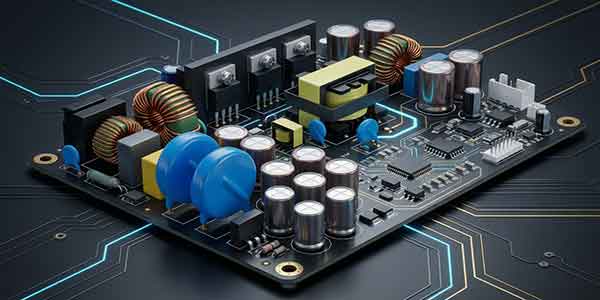
Wide-voltage LED drivers rely on advanced Switched-Mode Power Supply topology. Pulse Width Modulation controllers dynamically adjust internal switching duty cycles based on incoming voltage shifts. Higher input voltages trigger reduced pulse widths to prevent overcurrent condition in primary circuits. Lower input voltages prompt wider pulse durations to maintain steady energy delivery across the converter stage. This real-time feedback mechanism ensures consistent secondary output under erratic grid conditions.
Active Power Factor Correction circuits play a crucial technical role in wide-voltage design. Integrated PFC stages align input current waveforms precisely with incoming voltage phases. This processing achieves high power factor ratings exceeding 0.95 across broad voltage ranges. Active PFC filtering minimizes Total Harmonic Distortion below critical industry thresholds. Clean current draw protects internal components and reduces noise pollution across local electrical networks.
Custom wide-band transformers deliver robust magnetic isolation and stable voltage transformation. High-permeability ferrite cores handle saturation risks caused by broad input variations. Dedicated constant-current control loops monitor output levels continuously to protect sensitive LED arrays. Precise current regulation eliminates light output flicker and prevents junction overheating in LED modules. These engineered SMPS subsystems guarantee reliable operation across harsh industrial environments.
2.3: Advanced Protection Mechanisms: Overvoltage, Lightning Surges, and Thermal Control
Power spikes in industrial yards ruin poorly protected lights very fast. To handle these nasty line surges, tough LED drivers rely on heavy-duty clamping components like Metal Oxide Varistors and Gas Discharge Tubes. When indirect lightning strikes or large factory gear switches on, voltage spikes hit the line hard. These surge components absorb that raw energy instantly. They divert thousands of dangerous volts away from fragile driver circuits before damage occurs.
On the control board, smart monitoring chips check live current and voltage nonstop. If a severe power surge breaks through, these chips act as an automatic safety valve. They throttle down power output immediately or force a quick protective shutdown. Once grid conditions settle down, the driver turns itself back on without any human help. Facility managers do not have to climb ladders or reset tripped breakers after every little electrical hiccup.
Excessive heat is another silent killer for long-term driver health. High-quality floodlights pack their driver compartments with dense thermal potting compound and tough die-cast aluminum housing. This solid layout pulls internal heat away from delicate silicon parts directly to the outside air. If ambient temperatures get too hot, built-in thermal sensors trim output power down slightly to keep things cool. Combining heavy surge clamping with active thermal throttling keeps outdoor lights running strong for many years.
3: Why Industrial and Outdoor Applications Demand 90V-305V LED Flood Lights
3.1: Heavy Machinery and Inductive Load Fluctuations in Industrial Plants
Heavy industrial equipment puts massive stress on factory electrical networks. When large electric motors, compressors, or arc welders start up, they draw huge inrush currents. This sudden demand causes severe line voltage drops across the local grid. In many manufacturing plants, operating voltage can instantly plunge well below normal rating levels.
Standard narrow-voltage LED drivers struggle during these heavy inductive load events. Traditional power units cannot handle deep voltage dips smoothly. They often shut down briefly, causing annoying light flickering across assembly floors. Repeated voltage sags and rapid switching spikes also overheat internal components, leading to premature driver breakdown.
A 90V–305V wide-voltage driver eliminates these operational headaches completely. Built-in pulse width regulation adjusts dynamically to severe input drops down to 90 volts. The power supply maintains a steady constant current to the LEDs without flickering or dipping. Choosing wide-voltage fixtures protects lighting infrastructure from harsh industrial power surges and keeps facility lines running smoothly.
3.2: Remote Sites, Generators, and Outdoor Sports Facilities
Remote mining operations, construction jobsites, and outdoor sports venues frequently operate far from main utility grids. These facilities rely heavily on diesel generators or long, undersized transmission wires. Fuel load changes cause generator voltage to jump or dip unpredictably. Heavy cable runs also create significant voltage drops over long distances, leaving light fixtures starved for steady power.
Standard narrow-input floodlights perform poorly on unstable off-grid power. Voltage spikes from sudden generator unload events easily fry sensitive driver components. Conversely, deep voltage sags cause lights to dim, flicker, or shut off completely. In outdoor sports fields, a sudden blackout halts games instantly and creates safety hazards for players and spectators.
Installing 90V–305V wide-voltage LED floodlights solves off-grid power issues effortlessly. These robust drivers absorb continuous generator fluctuations without dropping output lumens or overheating. They deliver stable illumination across varying cable distances, regardless of sudden voltage swings. Facility managers can run bright, dependable lighting on diesel power while avoiding frequent driver replacements and downtime.
3.3: Coastal, High-Humidity, and Extreme Outdoor Environments
Salt spray and high humidity quickly wreck outdoor lighting setups near the ocean. Moist air penetrates poorly sealed fixture housings, causing short circuits and rusty terminals. Standard light drivers rust out or fail when water vapor gets inside the casing. Outdoor installations need real structural waterproofing to withstand marine weather over time.
Coydon built the KD-FLN and KD-FLM series floodlights with IP66 rated aluminum enclosures. Thick silicone gaskets press tight against the housing edges to block rain and fine dust completely. Inside, engineers pour thermal potting compound over the driver circuit boards. This extra barrier protects delicate internal components from ambient moisture and salt air corrosion.
Pairing IP66 waterproofing with 90V–305V wide voltage drivers gives these floodlights outstanding field durability. The wide input range keeps the lights burning bright through severe coastal storm voltage dips. Corrosion-resistant materials protect the exterior, while wide voltage circuitry stabilizes internal power. Port authority teams save big on replacement parts and climbing gear maintenance.
3.4: Global Voltage Compatibility for International B2B Procurement
International lighting buyers usually struggle with regional grid differences. North American projects often run on 120V or 277V systems, while European and Asian sites stick to 230V standards. Sourcing narrow-voltage fixtures forces contractors to maintain separate inventory lines for different regional markets. This split buying strategy ties up working capital and creates warehouse management headaches.
Switching to 90V–305V wide voltage drivers solves global purchasing hassles in one move. A single fixture model works seamlessly across North American 277V commercial lines, European 230V grids, and global 120V setups. B2B buyers no longer need to split factory orders or worry about accidental wrong-voltage installations on job sites.
Consolidating fixture orders around 90V–305V drivers delivers major financial wins for international distributors. Purchasing larger volumes of a single SKU lowers unit costs and boosts supplier bargaining power. Warehouses hold less total safety stock, which frees up cash flow and simplifies logistics. Universal voltage compatibility gives global procurement teams a clean, cost-effective supply chain advantage.
4: Case Study Comparison: Upgrading from Traditional 1000W Halogen to 150W LED Flood Lights in Outdoor Tennis Courts
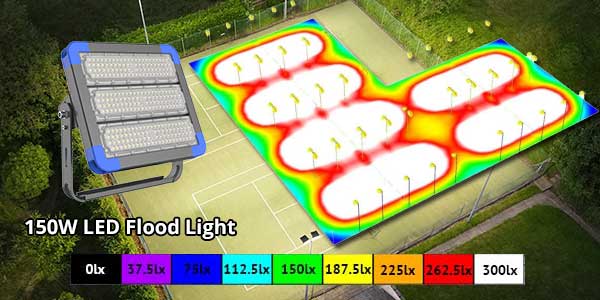
The Dialux Report:
high power LED flood lights 150 watt x 120 piece ( Project 02 )

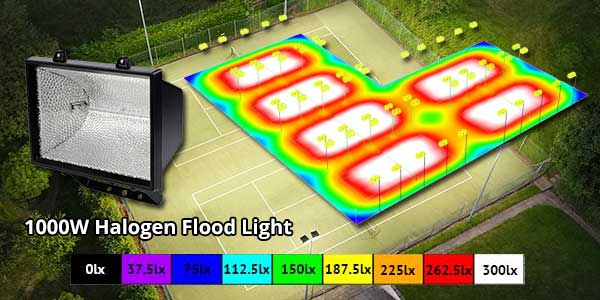
The Dialux Report:
Halogen flood lights 1000 watt x 120 piece
4.1: Baseline Analysis: The Shortcomings of Traditional 1000W Halogen Floodlight Systems
Old 1000W halogen floodlights on outdoor tennis courts create endless financial headaches for site operators. These legacy metal halide and halogen fixtures burn through massive amounts of electricity every night. Most of that electrical power turns directly into waste heat rather than bright, usable light. Heavy magnetic ballasts draw extra unseen energy, pushing total fixture consumption close to 1100 watts per light. Court owners end up paying massive monthly utility bills while players still suffer from dim courts.
Halogen bulbs also lose their brightness very fast under continuous daily use. Intense bulb heat causes rapid lumen decay after just a few hundred operating hours. This quick drop-off leaves dark patches and uneven light distribution across the court surface. Old magnetic ballasts also cause visible light flicker, which tires out players during fast night matches. Loud ballast buzzing and hum further ruin the sporting environment for nearby spectators.
Maintaining these hot 1000W fixtures gets extremely expensive very quickly for sports facilities. Extreme internal heat cooks rubber weather gaskets, dries out wiring insulation, and pops expensive bulbs constantly. Maintenance crews have to rent costly bucket trucks every few months to swap dead lamps on tall poles. Furthermore, long restrike times mean lights stay dark for fifteen minutes after sudden brief power drops. These frequent bulb changes raise upkeep costs and disrupt scheduled court rental revenues.
4.2: The Modern Solution: Deploying Coydon KD-FLN-W150 LED Flood Lights
Wiring in Coydon KD-FLN-W150 floodlights fixes dark tennis courts right away. These 150-watt units put out 130 lumens per watt on Lumileds 3030 chips. They throw raw bright light across the court while pulling eighty percent less wall power. Facility managers notice lower electric bills on their next monthly statement.
Players rushing the net need clean sight lines without blinding glare overhead. Custom beam glass covers both baselines and sidelines evenly with zero bright spots. A CRI rating over 80 helps eyes pick up fast tennis balls instantly during night play. Constant current control kills driver hum and stops light flicker cold.
Old halide lamps waste time warming up, but these LEDs turn on at full power immediately. Tough IP66 aluminum shells shield circuit boards from wind, rain, and heat. These 150W lights run nightly without fading out or popping internal parts. Field crews stay off high pole ladders, saving time and gear rental costs.
4.3: Direct Performance & ROI Face-Off: Halogen vs. 150W LED
Replacing old 1000W halogen fixtures with Coydon 150W LED floodlights slashes court energy use by eighty-five percent. Standard halogen units draw nearly 1100 watts when counting heavy ballast loss. In contrast, the KD-FLN 150W LED pulls exactly 150 watts at the wall while throwing brighter, cleaner light. This massive drop in wattage cuts monthly utility bills instantly across multi-court sports facilities.
Beyond power savings, DIALux simulation data shows massive jump in court light quality. Average illuminance increases from under 200 lux to over 400 lux across six retrofitted tennis courts. Overall light uniformity (U0) jumps above 0.70, completely eliminating dark patches between baseline corners. Players get crisp visibility and zero light flicker, making fast night games much safer and more enjoyable.
| Performance Metric | Old 1000W Halogen | Coydon 150W LED (KD-FLN) | Improvement Impact |
| System Wattage | 1,100W (with ballast) | 150W | 85% Power Reduction |
| Avg Illuminance | < 200 Lux | > 400 Lux | 100%+ Lux Boost |
| Uniformity (U0) | 0.45 (patchy) | > 0.70 | Even Light Spread |
| Lifespan | 2,000 Hours | 50,000+ Hours | 25x Longer Life |
Financial payback happens fast due to combined power savings and zero bulb replacement costs. Cutting 950 watts per fixture saves over 3,000 kilowatt-hours per light annually under typical nightly play schedules. Facility owners recover their initial LED fixture purchase and installation expenses within six to twelve months. After reaching full ROI, the high-efficiency fixtures generate pure operational savings month after month.
4.4: Grid Resilience: How Wide Voltage Input Protected the Court Lighting
Nighttime power demand creates huge voltage drops across commercial and municipal sports complexes. When nearby air conditioners, floodlights, or pumps kick on together, grid voltage plummets quickly. Narrow-input drivers choke under these sudden sags, causing lights to flicker, dim, or shut down entirely. A sudden court blackout halts matches mid-game and risks injury for players running at full speed.
Coydon 90V–305V wide voltage drivers eliminate these grid-induced lighting failures completely. Internal switch-mode power circuits auto-adjust to voltage dips, keeping current draw steady even when line voltage drops down toward 90V. The floodlights maintain full light output during severe evening voltage sags without dropping lumens or overheating. Court managers never worry about sudden blackouts when surrounding facilities draw heavy power loads.
Wide voltage protection also shields sensitive internal driver parts from damaging voltage surges. When heavy loads turn off suddenly, grid voltage spikes sharply above normal operating levels. The wide input range absorbs these brief power spikes safely without blowing fuses or popping capacitors. This built-in grid resilience keeps court lights burning bright night after night, extending fixture lifespan and protecting facility investments.
5: Technical Excellence: Introducing Coydon Lighting’s KD-FLN & KD-FLM Series
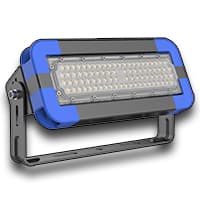
50 Watt
KD-FLN-W50
310mm x 87mm x 170mm
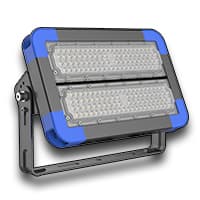
100 Watt
KD-FLN-W100
310mm x 87mm x 228mm
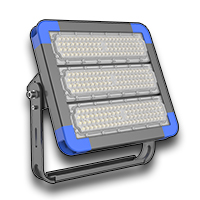
150 Watt
KD-FLN-W150
310mm x 87mm x 309mm
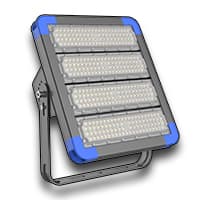
200 Watt
KD-FLN-W200
310mm x 87mm x 382mm
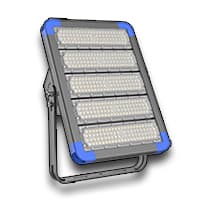
250 Watt
KD-FLN-W250
310mm x 87mm x 459mm
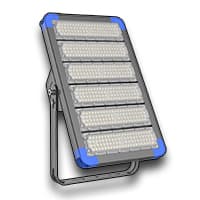
300 Watt
KD-FLN-W300
310mm x 87mm x 539mm
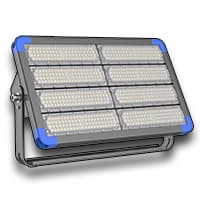
400 Watt
KD-FLN-W400
310mm x 107mm x 388mm
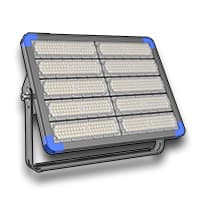
500 Watt
KD-FLN-W500
310mm x 107mm x 461mm
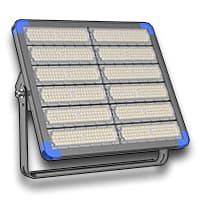
600 Watt
KD-FLN-W600
310mm x 107mm x 529mm
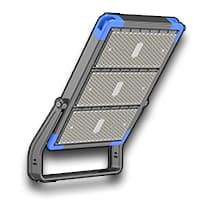
750 Watt
KD-FLM-W750
462mm x 584mm x 111mm
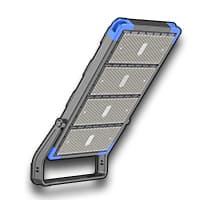
1000 Watt
KD-FLM-W1000
462mm x 761mm x 111mm
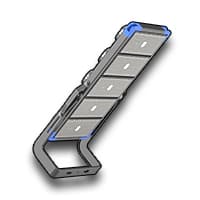
1250 Watt
KD-FLM-W1250
502mm x 1072mm x 307mm
| Input Voltage: | AC 85V – 277V |
| Colour Temperature: | 3000K / 4500K / 6000K |
| Color Rendering Index: | 80+ |
| LED Type: | LED SMD 3030 ( Lumileds ) |
| IP Grade: | IP66 |
| Material: | Aluminium + PC Lens |
| Luminous Efficiency: | 130 Lumens per watt |
| Beam Angle: | KD-FLN: 15° / 30° / 45° / 60° / 90° KD-FLM: 10° / 25° / 45° / 60° / 90° / 65 x 25° / 130 x 30° |
| Warranty: | 5 Years |
5.1: Comprehensive Power Range: From 50W KD-FLN to 1250W KD-FLM High-Mast Solutions
Coydon builds two core floodlight lines for industrial lighting jobs. The smaller KD-FLN series spans 50W to 600W. Field crews wire up these units on tennis courts, factory yards, building walls, and site perimeters. They handle daily outdoor runs without burning through driver parts.
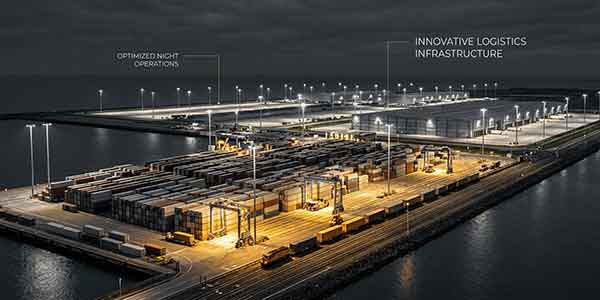
For big sites needing long light throws, the heavy KD-FLM series covers 750W to 1250W models. Built with split modular driver bays, workers bolt KD-FLM lights straight onto tall high-mast poles. They light up shipping ports, airport aprons, rail hubs, and outdoor arenas, killing dark spots across wide open spaces.
Both fixture lines run on 90V–305V wide voltage drivers and IP66 die-cast aluminum bodies. Mounted Lumileds 3030 chips deliver crisp white light without driver hum or flicker. Having both series available helps site buyers order all their outdoor lights from one factory source.
5.2: Key Photometric & Electrical Specifications
Coydon floodlights use heavy-duty driver parts made for rough outdoor jobs. The power supplies take wide voltage feeds from AC 85V–277V or 90V–305V. When grid power drops, current stays stable so lights never flicker or dim out. Fitted Lumileds 3030 chips pump out 130 lumens per watt. These drivers handle nightly voltage sags without frying internal circuits.
Job sites can pick three light color options: 3000K warm, 4500K neutral, or 6000K cool white. Color rendering holds above CRI 80, keeping site colors clear and accurate after dark. Custom lens covers shape the light pattern, stopping wasted spill light beyond perimeter fences. Field crews get bright ground visibility without blinding crane operators or passing traffic.
Die-cast IP66 aluminum housings seal out torrential rain, blown grit, and coastal humidity. Internal potting compound drains heat away from sensitive chips fast during hot summer runs. Built-in surge gear takes the hit from lightning strikes and grid switching spikes safely. Coydon backs every fixture with a real 5-year factory warranty.
5.3: Precision Optical Distribution: Beam Angles for Tailored Industrial & Sports Lighting
Lighting engineers match beam angles to mounting heights so lumens hit working areas instead of empty air. For the compact KD-FLN line, Coydon fits five symmetric glass options: 15°, 30°, 45°, 60°, and 90°. Narrow 15° and 30° lenses throw light down long boundary fences or up tall exterior walls. On open factory grounds and parking lots, wider 60° and 90° covers spread illumination across broad spaces.
High-mast setups call for tight light control over far distances. The larger KD-FLM series brings 10°, 25°, 45°, 60°, and 90° symmetric optics for tall poles. Engineers can also spec 65×25° or 130×30° asymmetric lenses for directional coverage. Asymmetric glass pushes light forward across playing fields and docks while keeping harsh glare out of crane cabs.
Right lens choices stop dark patches and keep spill light off neighboring property lines. Polycarbonate lens covers resist UV damage, so they will not turn yellow under hot summer sun. Lighting designers can simulate fixture layouts on DIALux software before placing site orders. Using exact optics puts useful light right where crews need it every night.
5.4: Rugged Durability: Aluminum Housing, PC Lens, and 5-Year Warranty Protection
Coydon floodlights use heavy die-cast aluminum housings built for rough outdoor environments. Deep cooling fins on the back frame pull heat away from internal driver circuits fast. Keeping internal temperatures low protects driver capacitors and prevents early lumen drop. The tough metal casing handles high heat, salt spray, and heavy vibration without warping.
The front optical face features impact-resistant polycarbonate lens covers. These tough PC lenses take hard hits from flying debris, hail, or gravel during bad storms. Built-in UV blockers stop the clear lens material from yellowing or cracking under hot sun exposure. Light output stays clean and bright through years of continuous outdoor service.
An IP66 silicone seal keeps water, dust, and coastal moisture out of driver bays completely. Factory crews test every assembled light housing before shipping units to customer job sites. Coydon backs all KD-FLN and KD-FLM series fixtures with a standard 5-year replacement warranty. Site managers get reliable outdoor lighting with zero long-term maintenance costs.
6: Precision Lighting Design: How Coydon’s DIALux Simulations Eliminate Project Risk
6.1: Why Generic Calculations Fail in Complex Outdoor and Industrial Spaces
Guessing fixture counts or doing 1-to-1 halogen replacements creates huge lighting problems on site. Rule-of-thumb spacing ignores pole placement, mount height, and beam geometry completely. Fixtures placed too far apart leave dark gaps between courts or work bays. Mounting high-wattage lights without proper beam control throws blinding glare directly into operator eyes.
Industrial sites feature complex layouts like tall storage racks, crane tracks, and uneven ground elevation. Generic spreadsheets fail to account for how shadows fall behind heavy equipment or structural columns. Workers struggle to read shipping labels or track fast moving objects when light levels drop unexpectedly. Poor beam selection also wastes light by spraying lumens past boundary fences into neighboring yards.
Proper site illumination demands detailed photometric modeling before buying any hardware. Simple wattage rules cannot predict light uniformity, lux levels, or field glare limits accurately. Professional layouts calculate surface reflection, pole angle offsets, and mounting positions ahead of installation. Avoiding quick estimates prevents costly rewiring work and protects site safety from day one.
6.2: Tailored Photometric Reports: Lux Mapping, Uniformity, and Angle Optimization
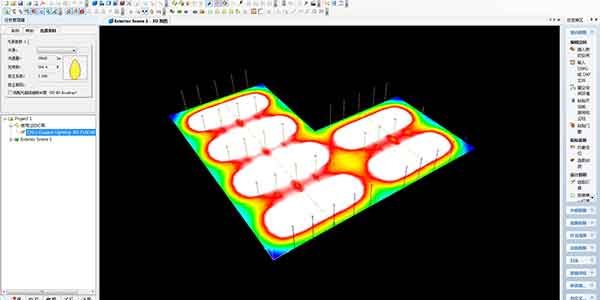
Coydon provides free 3D DIALux lighting layouts to remove all installation guesswork for project managers. Application engineers build digital models matching exact site dimensions, pole locations, and target light levels. The software generates detailed lux maps that show light intensity across every square meter of the facility. Facility owners see exact ground brightness levels before making any purchasing commitment.
The simulation output includes thorough uniformity calculations to prevent harsh dark spots and bright pools. Engineers tweak fixture optics and tilt angles until the uniformity ratio (U0) exceeds site specifications. Reports display clear pseudo-color diagrams that highlight light spread across courts, docks, or warehouse aisles. Planners confirm that baseline corners and high-activity zones get required foot-candles without trial-and-error field adjustments.
These customized reports specify ideal mounting heights, aiming angles, and bracket placement for every single pole. Contractors receive clear point-by-point aiming charts that speed up physical installation on site. Following the simulation guide ensures optimal lux levels while keeping glare low for equipment operators. Coydon delivers complete photometric verification to guarantee project success before any lights go up.
6.3: Step-by-Step: How to Request Your Free DIALux Simulation
Getting a custom 3D lighting layout from Coydon takes just three simple steps. First, send your project layout drawings, site dimensions, and pole height details to our engineering team. Include targeted lux levels and any specific beam angle preferences for your site. Rough hand sketches or basic dimensions work fine if formal CAD files are unavailable.
Next, Coydon application engineers input your site parameters directly into DIALux software. They calculate light distribution, evaluate pole spacing, and test different optic configurations for your project. The team refines fixture tilt angles to deliver uniform light while keeping glare low. You receive a complete photometric report with pseudo-color lux maps within 24 hours.
Finally, review the simulation findings with our technical team to verify all site requirements. We adjust fixture wattages, optics, or pole placement if your project scope changes. This free service removes financial risk by proving performance before you place a order. Contact Coydon today to get your free DIALux lighting report started immediately.
7: Conclusion & Strategic Procurement: Upgrade Your Lighting Infrastructure Today

7.1: Summary of Value: Grid Stability, 85% Energy Savings, and Professional Optics
Upgrading to Coydon LED floodlights resolves grid voltage issues while driving down facility operating costs. Built-in 90V–305V wide voltage drivers absorb severe voltage sags and line spikes effortlessly. Lights stay bright and flicker-free during peak evening power draws across industrial zones. Facility owners protect their lighting hardware from electrical damage without installing external line stabilizers.
Replacing outdated metal halide or halogen lights cuts power consumption by up to eighty-five percent. High-efficiency Lumileds 3030 chips deliver 130 lumens per watt across all wattage options. Precise symmetric and asymmetric beam optics throw lumens right onto target areas, eliminating wasted spill light. Facilities achieve target ground illuminance using fewer total fixtures and lower circuit loads.
Solid IP66 aluminum construction and a 5-year warranty guarantee long service life under tough conditions. Free DIALux photometric simulations verify lux levels and light uniformity before purchase orders are placed. Coydon delivers reliable, energy-saving floodlights built specifically for complex sports courts and industrial grounds. Facility managers get predictable lighting performance and rapid payback on their retrofit investments.
7.2: Take Action: Partner with Coydon Lighting for Your Next Upgrade
Ready to fix voltage drops and cut lighting energy costs across your facility? Upgrading your outdoor illumination is simple with Coydon engineering support. Our wide voltage floodlights deliver steady lumen output and long-term reliability under rough grid conditions. Partner with an experienced manufacturer that understands harsh industrial environments and complex sports court requirements.
Take the first step toward superior site lighting today. Click the Inquiry Now button to connect directly with our application engineers. Share your project drawings, pole specifications, and target lux levels with our technical team. We will analyze your site details and recommend the exact floodlight models for your application.
Recieve your customized project package within 24 hours of submitting your inquiry. You get a free 3D DIALux lighting layout with full lux mapping and uniformity calculations. Our team also provides direct factory pricing to help you maximize your retrofit budget. Contact Coydon Lighting now to start your free photometric simulation and project quote.
8: Frequently Asked Questions

Q1: What happens if grid voltage temporarily spikes above 305V on site?
Coydon wide voltage drivers feature built-in heavy MOV surge suppressors and transient voltage absorbers. These protection parts take short voltage spikes safely without blowing internal driver fuses or damaging LED boards. The driver circuit absorbs sudden line surges during heavy equipment switching without dropping light output.
Q2: How do Coydon floodlights perform in humid coastal and marine locations?
Every KD-FLN and KD-FLM series fixture uses an IP66 silicone seal with corrosion-resistant powder coating. Stainless steel exterior hardware and die-cast aluminum bodies prevent salt spray rust over years of service. Coydon covers coastal installations under our standard 5-year replacement warranty without salt corrosion exclusions.
Q3: What site information is required to get a free DIALux report?
Our application engineers need your project dimensions, pole heights, mount angles, and required lux target levels. Simple hand sketches with basic measurements work fine if formal CAD drawings are unavailable. Coydon delivers a full 3D layout report with lux maps within 24 hours of receiving site details.
Q4: Why select asymmetric optics over standard symmetric lenses for sports courts?
Asymmetric lenses like 65×25° throw light forward across playing areas while blocking light spill behind the fixture. Players see incoming balls clearly without staring into direct high-mast fixture glare. This optical control also keeps stray light off neighboring residential homes around sports court complex borders.