Aluminum Housing + PC Lens: Why Material Choices Matter in Outdoor Lighting

Table of Contents
1: The Harsh Reality of Outdoor Lighting Environments: Why Materials Dictate Project Success
1.1: The Costly Consequences of Early Fixture Failure in Harsh Climates
Walk around any high-mast installation after a couple seasons. Sun beats down on these housings for months, followed by freezing nights and sudden storms. Physical damage creates real issues, too. Stray balls shatter optical covers at sports fields. Heavy machinery constantly shakes light brackets in busy industrial yards. Near coastal sites, salty air slowly eats away at cheap metal parts.
If you buy budget fixtures, failure strikes surprisingly fast. Cheap plastics and thin sheet metal break down under heavy UV light. The housing warps and cracks open. Water leaks right past dried-out rubber seals into the wiring box. Cheap plastic covers go cloudy in months, blocking bright light output. Before you know it, minor material flaws cause complete fixture shutdowns and unexpected short circuits.
For facility teams, early dead lights mean major maintenance bills. You need expensive boom lifts and certified electricians just to fix one high pole light. Emergency work orders wipe out maintenance funds in a hurry. Unlit loading docks and dark driveways also bring huge safety risks for staff working night shifts. Skimping on solid materials really costs double later on.
1.2: Beyond Aesthetics: Why B2B Procurement Must Prioritize Material Science
Many B2B buyers make a classic mistake when picking outdoor lights. A new floodlight sample looks great inside a clean office room. Yet smooth casing designs mean very little once fixtures sit on tall poles outdoors. Cheap unit prices distract purchasing teams from serious future problems. Buying fixtures on price tags alone brings delayed projects and damaged supplier reputations.
Contractors must dig into core material specs before signing contracts. Long service life comes down to raw metals and tough optical parts. Solid die-cast aluminum pulls LED heat away much faster than thin metal sheets. Good UV-treated lenses stay clear in baking sun, while low-cost plastics turn yellow and snap open. Materials alone decide whether lights last five years or quit early.
Focusing on material quality changes everything for installation crews. Solid builds help your lighting job pass client sign-off tests on day one. You skip messy warranty claims, mad property owners, and late night emergency calls. Smart material choices turn tricky lighting purchases into safe, hassle-free projects every time.
2: The Gold Standard Combination: Die-Cast Aluminum Housing + PC Lens

2.1: Structural Integrity and Thermal Management: Die-Cast Aluminum vs. Sheet Metal & Plastics
Your choice of housing material makes or breaks any outdoor installation. Out on active jobsites, electrical contractors run into die-cast aluminum, thin sheet metal, or cheap plastic bodies. They might look similar in catalogs. Yet they act completely differently once intense afternoon heat builds up inside. Knowing these hard physical limits saves purchasing managers from huge warranty headaches later.
In my experience, die-cast aluminum is the single best choice for tough sites. Huge factory presses blast liquid aluminum alloy into custom steel molds under massive pressure. That gives you a solid, seamless shell. No weak welded seams to break open later. Cooling fins are cast right onto the back frame, too. Thermal energy flows off hot LED boards and dumps straight into open air. That clean design gives you high impact protection and top thermal control.
Now look at sheet metal fixtures on tall light poles. Workers stamp flat aluminum or steel sheets and weld joints together by hand. Heavy wind shakes those poles day after day. Pretty soon, small welded seams split right open. Driving rain sneaks past broken seals, frying LED drivers in bad storms. Flat sheet metal cannot cool high-power chips either. Trapped heat cooks internal electronics fast.
Plastic housings are even worse for high-wattage commercial lighting. Basic polymers soften and sag quickly under hot sun rays. Continuous heating and cooling cycles force plastic cases to crack or release nasty chemical gas inside. Those trapped fumes fog up internal glass lenses for good. Long before your five-year warranty ends, light output tanks completely.
Put raw strength, thermal path, and long-term durability side by side. Die-cast aluminum wins every time. Not even close. It shields sensitive driver boards while dumping heat fast. For B2B buyers, choosing die-cast housings remains the only truly safe way to protect site margins.
2.2: Optical Clarity & Shatterproof Protection: UV-Stabilized Polycarbonate (PC) vs. Tempered Glass & Acrylic
Pick the wrong front lens material and your outdoor light ends up broken fast. Out on busy job sites, contractors mainly see three optic types. They run into polycarbonate plates, tempered glass, and standard acrylic covers. Each material acts completely differently under heavy physical hits or constant sun. Choosing poorly creates continuous repair calls and early maintenance bills for site managers.
Polycarbonate handles extreme abuse better than any alternative today. Why? Its raw impact strength sits about 250 times higher than regular glass. That performance easily qualifies fixtures for strict IK10 impact ratings in high-risk zones. Stray baseballs, flying gravel, rocks, or accidental ladder knocks bounce right off the cover. The tough plastic lens stays whole instead of shattering everywhere on site.
Tempered glass brings high optical clarity initially, sure. But sharp impacts snap glass quickly without warning. Once a glass lens breaks, driving rain washes straight into sensitive internal driver boards. Acrylic withstands mild physical shocks better than glass, no doubt. Yet direct heat weakens it fast. Cold winter winds make standard acrylic brittle, forming fine spiderweb cracks across the surface.
Sunlight poses another major hazard to raw plastics used outdoors. Cheap polymers turn yellow fast after a few short months of heavy sun exposure. Modern UV-stabilized polycarbonate fixes that exact failure mode for good. Special chemical blockers mix directly into the raw resin matrix to trap harmful rays early. That extra layer prevents lens clouding, keeping lumen output high over years of desert heat.
Put physical strength, site safety, and clear optical output side by side. Polycarbonate lenses win every single time. Exceptional impact resistance prevents sudden breakage, while advanced UV formulas block premature yellowing. For B2B procurement teams, specifying UV-stabilized PC optics stays the smartest move for long-term site success. Real fixture performance always begins right at the front lens surface.
2.3: Engineering Synergy: IP66 Weatherproofing and IK Impact Resistance in Heavy-Duty Fixtures
Good aluminum alloy and strong PC optics mean nothing if they do not fit right. Out on active construction sites, these parts have to line up perfectly every single time. High-precision tooling and solid silicone gaskets create the real wall against extreme weather. Without good mechanical fitment, internal electronic driver boards short out fast during unexpected storms.
Getting a true IP66 rating on high light poles takes exact mold work. Aluminum castings need to match PC lens edges down to tiny fractions of a millimeter. Thick silicone gaskets sit tightly compressed inside deep housing channels. That tight mechanical seal stops high-pressure water jets, ocean salt spray, and fine dust particles. Zero leaks get past the boundary, even under heavy rain.
Physical impact protection works through smart mechanical balance. When heavy objects hit a fixture head, force moves quickly through the main body. The rigid metal shell takes most structural stress. Meanwhile, the flexible PC lens flexes a bit without snapping open or cracking. Constant gasket compression keeps small gaps from opening during hard strikes. That team effort keeps IK impact ratings high in dangerous areas.
Drastic seasonal weather swings test physical gaskets constantly. Hot summer days expand metal housings and plastic lenses at different speeds. High-grade silicone stays springy across extreme hot and cold temperature cycles without hardening. That long-term elasticity prevents seal twisting, keeping destructive internal moisture out completely year after year.
When precise metal castings, tough optics, and durable gaskets fit together, fixtures hold up under extreme field stress. B2B contractors get real IP66 weather sealing plus dependable IK shock resistance for demanding jobs. Specifying well-matched fixture designs prevents water damage, eliminates costly emergency repairs, and protects project budgets over time.
3: In-Depth Engineering Analysis: How Material Selection Impacts LED Efficacy and Lifespan

3.1: Thermal Conductivity Breakdown: Junction Temperature, Heat Sinking, and LM-80/TM-21 Lumen Maintenance
Think about internal junction heat before picking outdoor light fixtures for your projects. High-power LEDs create extreme thermal loads inside tiny semiconductor layers during normal field operation. Trapping that heat causes internal junction temperatures to shoot up fast without warning. Knowing basic material physical limits saves contractors from early lumen failure on site. Nobody wants unexpected warranty calls or expensive maintenance crew visits.
Look closely at raw thermal conductivity numbers between aluminum alloys and plastic lenses. Typical aluminum casting alloys conduct heat at roughly 205 to 235 W/m·K. Plastic polycarbonate sits way down near a weak 0.2 W/m·K. Massive performance gap. Aluminum moves trapped thermal energy over a thousand times faster than raw plastic shells ever could. Plastic simply acts like a warm blanket trapped around the LEDs.
Dropping LED junction temperatures directly changes long-term field reliability for site owners. Thick aluminum cooling fins pull excess thermal load straight off driver boards and LED chips. That active thermal path lowers core junction temps by 30°C to 40°C compared to unvented plastic bodies. Keeping chips cool stops phosphor breakdown, protecting initial light color and overall brightness year after year.
Lighting engineers use official IES testing methods to forecast long-term fixture decay accurately. LM-80 test reports measure actual lumen drop over thousands of continuous burning hours. TM-21 mathematical formulas then project those data curves out to real-world lifespans. Running cooler junction temps lets quality aluminum fixtures hit 50,000 to 100,000 hours before L70 limits. That gives contractors total confidence during installation.
Thermal paste and mounting interfaces matter a lot for real heat transfer, too. Even tiny air gaps between LED boards and aluminum bodies block heat flow fast. Proper factory machining keeps contact surfaces flat for optimal thermal dissipation. Quality thermal pads fill remaining micro gaps seamlessly. Total system design guarantees solid operation under brutal summer heat conditions.
Put physical material laws and LM-80 test reports side by side. Heavy aluminum heat sinking stays completely mandatory for tough commercial builds. High thermal conductivity keeps chip temps safely low month after month. For B2B buyers, specifying die-cast aluminum heat sinks guarantees verified TM-21 life metrics and protects project profits long term. Real field performance requires solid engineering physics every single time.
3.2: Weatherability and Environmental Corrosion: Salt Spray, UV Degradation, and Powder Coating Protection
Ever inspect raw aluminum after six months near coastal air? Pure rust. Ocean humidity wrecks untreated metal fast out on real jobsites. Salty fog and ammonia fumes hit exposed housings every single day. Tiny salt specks grab moisture right out of damp air. Thin corrosive liquid sits directly on metal frames. Chemistry eats raw alloy quickly. Structural housing failure follows soon after.
What happens to raw aluminum near chemical plants or dockyards? Total disaster. Untreated alloy handles light fresh rain fine early on. But salt air sneaks into microscopic surface pores easily. Deep pitting starts across raw metal castings. Quick temperature swings make thin metal shells flex and crack open. Hidden rust weakens housing strength. Water leaks straight into driver boards.
Listen. Multi-layer powder coating provides a solid physical shield against brutal weather. Factory crews sandblast raw die-cast aluminum housings first. That cleans off manufacturing oil and grime completely. Pre-treatment chromate baths ensure thermosetting powder bonds permanently. Electrostatic spray guns push tough resin into deep cooling fins and tight corners. Anodizing creates a hard oxide shell. Zero corrosion.
Think intense summer UV radiation is harmless to outdoor paint finishes? No way. Extreme solar heat snaps cheap paint bonds easily. Ugly chalking, fading, and peeling happen within months. Quality outdoor powder coatings add specialized UV blockers. They reflect solar rays away instantly. That extra protective barrier keeps surface color consistent. Housing defense stays strong through years of baking heat.
Compare bare metal housings with properly coated fixtures along a salty coastline. Multi-layer powder coatings pass thousands of hours inside strict salt spray test chambers without peeling at all. No guesswork here. B2B contractors need to spec thick powder coating or anodized finishes upfront. Proper surface defense stops early field replacements and saves your project margins over time.
3.3: Total Cost of Ownership (TCO) & ROI Calculation: Initial Upfront Savings vs. Long-Term Maintenance Costs
Cheap light fixtures look great on initial procurement spreadsheets. Cheap plastic housings and thin sheet metal save a few dollars upfront. But smart B2B buyers calculate Total Cost of Ownership across five to ten years. Initial purchase price forms just a small fraction of real lighting expenses on active job sites. Cheap materials break down fast under harsh field conditions.
Look at real maintenance costs out on working job sites. Lightweight plastic fixtures yellow, crack, and fail within two years. Pure waste. Sending crews up in high boom lifts to swap dead lights gets expensive fast. Lift rental fees hit hard every single day. High electrician labor rates and factory downtime wipe out early fixture savings completely. Cheap lights bleed project profits silently month after month.
Die-cast aluminum bodies and UV-stabilized PC optics change project economics completely. Premium aluminum builds handle intense operating heat, heavy salt fog, and brutal solar rays without flaking. Solid IP66 seals block moisture and industrial dust entirely. These durable fixtures operate five to seven years completely maintenance-free. Zero unexpected failure calls. Lower warranty risks protect electrical contractors and facility owners long term. Huge financial difference.
What about real payback over a multi-year operational lifespan? Heavy aluminum fixtures keep high lumen output and verified TM-21 color stability year after year. High-efficacy 150 lm/W LED chips drop monthly power bills right away. Facility teams avoid repeated replacement cycles entirely. High energy efficiency and zero repair labor deliver full payback within eighteen months. Real profits follow right after that initial recovery period.
Never buy commercial lighting fixtures on sticker price alone. Cheap lights cost way more over time through endless maintenance calls and early failures. Quality aluminum builds protect capital budgets. B2B buyers specifying rugged fixtures guarantee low total cost, solid field performance, and maximum profit margins every single year.
4: Commercial & Industrial Application: Coydon Lighting KD-FLN and KD-FLM LED Flood Light Series
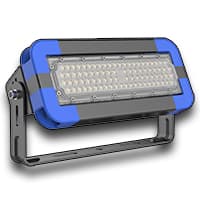
50 Watt
KD-FLN-W50
310mm x 87mm x 170mm
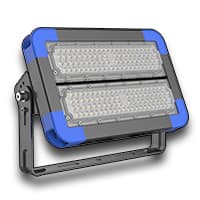
100 Watt
KD-FLN-W100
310mm x 87mm x 228mm
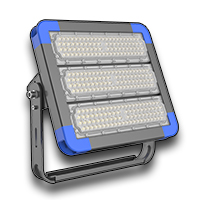
150 Watt
KD-FLN-W150
310mm x 87mm x 309mm
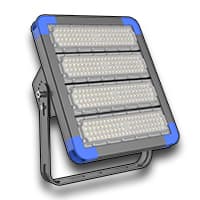
200 Watt
KD-FLN-W200
310mm x 87mm x 382mm
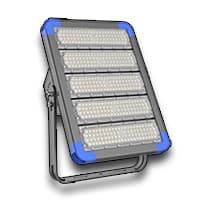
250 Watt
KD-FLN-W250
310mm x 87mm x 459mm
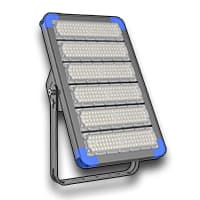
300 Watt
KD-FLN-W300
310mm x 87mm x 539mm
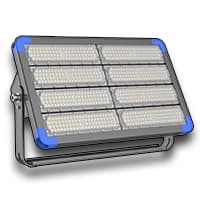
400 Watt
KD-FLN-W400
310mm x 107mm x 388mm
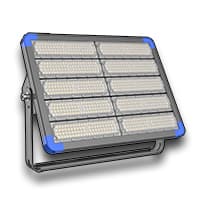
500 Watt
KD-FLN-W500
310mm x 107mm x 461mm
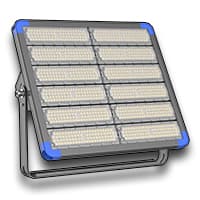
600 Watt
KD-FLN-W600
310mm x 107mm x 529mm
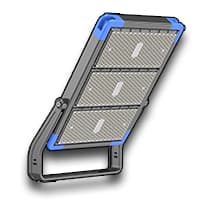
750 Watt
KD-FLM-W750
462mm x 584mm x 111mm
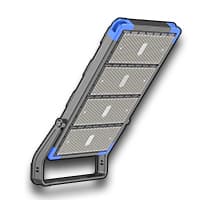
1000 Watt
KD-FLM-W1000
462mm x 761mm x 111mm
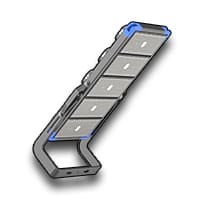
1250 Watt
KD-FLM-W1250
502mm x 1072mm x 307mm
| Input Voltage: | AC 85V – 277V |
| Colour Temperature: | 3000K / 4500K / 6000K |
| Color Rendering Index: | 80+ |
| LED Type: | LED SMD 3030 ( Lumileds ) |
| IP Grade: | IP66 |
| Material: | Aluminium + PC Lens |
| Luminous Efficiency: | 130 Lumens per watt |
| Beam Angle: | KD-FLN: 15° / 30° / 45° / 60° / 90° KD-FLM: 10° / 25° / 45° / 60° / 90° / 65 x 25° / 130 x 30° |
| Warranty: | 5 Years |
4.1: Built for Extreme Performance: 130 lm/W Efficacy with Lumileds 3030 LEDs (50W to 1250W Options)
Need high-power outdoor lighting that actually delivers under pressure? Look at the KD-FLN and KD-FLM series floodlights from Coydon Lighting. We built these industrial fixtures specifically for harsh factory yards, ports, and outdoor sports arenas. Engineering matters here. No fluff. Just raw photometric power and proven thermal performance on active job sites.
Efficiency defines modern commercial lighting projects. Both KD-FLN and KD-FLM floodlights deliver a verified 130 lumens per watt efficacy rating. High system efficacy reduces total power draw while outputting intense light coverage across massive areas. Lower wattage usage slashes monthly utility bills right away. That means fast capital payback for industrial facility owners.
Core LED component quality makes or breaks long-term luminaire reliability. We integrate premium Lumileds 3030 LED chips directly into every fixture board. High color rendering index above CRI 80 ensures sharp optical clarity and natural target visibility. Lumileds chips handle thermal stress exceptionally well, preventing early lumen degradation or color shift over years of continuous operation.
Power requirements vary wildly across different industrial lighting applications. That is why our floodlight lineup covers a wide power range from 50W all the way up to 1250W. Smaller 50W models illuminate narrow perimeter walkways smoothly. Massive 1250W high-power units flood high-mast port terminals, crane yards, and large sports fields with uniform illumination easily.
Choosing rugged KD-FLN and KD-FLM series floodlights guarantees dependable high-output performance. Quality Lumileds optics, 130 lm/W efficiency, and wide wattage flexibility give B2B contractors exact lighting solutions for every demanding job site.
4.2: Custom Optical Precision and Robust 5-Year Factory Warranty Assurance
Look closely at beam control out on site. Precision optics separate professional floodlights from cheap fixtures. Cheap lights scatter output blindly, wasting energy and creating harsh glare. Coydon Lighting fixes this with targeted optics. Photometric accuracy matters on real job sites. Zero light spill. Just sharp, directional beam coverage right where you need it.
Our KD-FLN series offers custom optical lenses for any mounting height. Pick from precise 15°, 30°, 45°, 60°, or 90° beam distribution options. Narrow 15° lenses throw intense light onto high-mast towers easily. Wide 90° optics cover broad yards evenly. Meanwhile, our KD-FLM series delivers flexible distribution setups for complex architectural and perimeter lighting layouts.
Bad outdoor weather wrecks cheap lights fast. Both floodlight series use solid IP66 water and dust seals. Thick silicone gaskets lock housing joints tight against heavy rain, salt spray, and pressure washes. High-impact optical lenses withstand flying debris without cracking. Moisture stays out completely, keeping internal drivers and LED boards safe during violent storms.
We back this build quality with a solid 5-year factory warranty. No fine print. No red tape. Every single component passes strict multi-stage testing before leaving our facility. If a driver or board fails during regular use, we replace it fast. Straightforward factory backing protects your budget and keeps project owners happy over time.
4.3: Tailored Lighting Engineering: Free DIALux Simulation Reports for Optimized Project Layouts
Guessing light fixture counts on industrial upgrade projects leads to very costly financial mistakes. Specifying too few fixtures leaves dangerous dark spots across active work floors. Installing too many lights wastes client energy budgets unnecessarily month after month. Coydon Lighting eliminates this guesswork entirely. We deliver custom lighting engineering before you buy a single fixture. Zero financial risk. Just precise photometric planning for your exact industrial space.
Our engineering team provides free DIALux simulation reports for every client project. Send us your site dimensions, mounting heights, reflectances, and target lux requirements today. We build an accurate 3D digital model of your facility inside professional DIALux software. Our expert engineers simulate exact light distribution, ground lux levels, and beam coverage. You see real photometric results on paper long before installation starts.
These detailed simulation reports optimize your entire site layout completely. We test different beam angles, lumen packages, and mounting locations to hit target levels efficiently. Precise calculations prevent over-lighting and minimize overall fixture quantities. That smart optimization cuts upfront hardware costs and lowers total monthly power usage. B2B contractors present clear, professional lighting proposals to project owners with total confidence. Our engineers verify uniformity ratios to eliminate dark spots.
Photometric accuracy streamlines project approval cycles significantly. Facility managers get clear false-color renderings, 3D models, and verified Lux heatmaps directly. No unexpected field surprises occur during final project commissioning. Partnering with Coydon Lighting gives you free engineering support from initial CAD drawings onward. Smart planning protects project profit margins every step of the way.
Industrial illumination requires verified engineering data always. Never rely on rough estimates for large warehouse retrofits. Professional lighting design guarantees code compliance and worker safety on site. Coydon Lighting supports your commercial bids with complete photometric documentation. Win more contractor bids with professional lighting simulations.
Custom optical simulations turn complex bids into winning proposals. Trust Coydon Lighting for expert engineering support. Our dedicated technical team stands ready to assist your next industrial lighting upgrade project from start to finish.
5: Conclusion & Next Steps: Upgrade Your Industrial Lighting Specification
Listen. Upgrading fixture specs protects your bottom line on real jobsites. Cheap light housings made of thin sheet metal or plastic fail fast outdoors. They cause endless repair calls and early replacements. Specifying heavy die-cast aluminum bodies and UV-resistant PC lenses guarantees long durability. Quality builds cut Total Cost of Ownership across multi-year operating lifespans. Zero regrets.
Check material standards before your next lighting tender or warehouse project starts. Look closely at salt spray resistance, IP ratings, and thermal management specs. Demand real photometric test reports and TM-21 lumen maintenance data upfront. Never trade housing thickness or driver quality for minor upfront savings. Smart specs save serious money.
Partner with Coydon Lighting on your next commercial lighting job. We supply high-efficacy LED floodlights and UFO high bays built for brutal environments. Our engineers provide free DIALux 3D simulation reports for your exact facility layout. No shortcuts. Reach out to our technical team today to optimize your layout and get factory sample units fast.
5.1: Partner with Coydon Lighting: Click “Inquiry Now” to Request Custom Quotations and DIALux Layouts

Ready to upgrade your industrial lighting project performance? Partner directly with Coydon Lighting today. Click the “Inquiry Now” button on our page right away. Share your project specs, ceiling heights, and layout files with our technical group. Our team builds custom DIALux simulation reports and direct factory price quotes fast. No waiting around. Secure high-efficiency fixtures, lower your operating costs, and protect your project margins on your next bid now.
6: Frequently Asked Questions

Q1: Why choose an aluminum housing over sheet metal or plastic for outdoor LED flood lights?
Aluminum (especially die-cast aluminum) offers exceptional thermal conductivity, acting as an efficient heat sink to draw heat away from LED chips, which prevents premature lumen depreciation. Unlike plastic, it resists high temperatures and does not melt or become brittle, and unlike untreated sheet metal, it provides superior structural rigidity and corrosion resistance.
Q2: How does a polycarbonate (PC) lens perform compared to glass in harsh outdoor environments?
High-quality polycarbonate lenses are virtually shatterproof, offering up to 250 times the impact resistance of glass (making them ideal for high-IK rated, vandal-resistant installations). To prevent yellowing or UV degradation over time, premium fixtures utilize UV-stabilized polycarbonate formulations.
Q3: What are the key performance specifications of Coydon Lighting’s KD-FLN and KD-FLM series?
The KD-FLN and KD-FLM series are high-performance LED flood lights delivering a high efficacy of 130 lumens per watt, powered by reliable Lumileds 3030 LEDs. They feature a robust IP66 weatherproofing rating and are backed by a solid 5-year warranty.
Q4: Can Coydon Lighting assist with lighting layout designs for commercial or industrial projects?
Yes. We provide professional value-added engineering support, including free DIALux simulation services to generate precise photometric layouts and lux distribution reports tailored to your specific project needs.
Q5: How can I request a custom quotation or technical consultation for my project?
You can easily get started by clicking the “Inquiry Now” button on our product pages to submit your project requirements, and our engineering team will provide expert guidance and tailored solutions promptly.