150 lm/W Explained: How High-Efficiency High Bays Lower Your Energy Bill

Table of Contents
1. Introduction: The Hidden Cost of Commercial and Industrial Lighting
Industrial electric bills keep climbing higher every single month. High power costs quietly take money straight out of your net profit. A massive chunk of that monthly expense comes directly from outdated facility lighting. Many warehouse owners still run old metal halide high bays. These legacy lamps waste huge amounts of electricity just to maintain standard work floor brightness.
These older lamps waste valuable power by turning energy into useless heat instead of light. That extra thermal output forces your facility air conditioning units to work much harder in summer. Metal halides also lose brightness very fast. Facility maintenance teams must spend extra time and money swapping dead bulbs constantly to keep work spaces safe.
Moving scissor lifts around active production floors just to change lights causes real operational downtime. The labor costs for constant bulb replacements add up quickly over a short period. Keeping those legacy fixtures running costs far more than most facility managers realize. Modern industrial operations simply cannot afford to waste energy on outdated lighting setups anymore.
1.1 Why Industrial Facilities Need High-Efficacy Lighting Solutions Now
Utility companies keep pushing commercial power rates higher every single year. Plant managers see bigger electric bills each month, even when factory production stays completely flat. Keeping the work floor properly lit costs way more today than it ever did in the past.
The old habit of just hanging any cheap light overhead does not work anymore. Buying power hungry fixtures that waste electricity makes zero sense in today’s tough business market. Plant supervisors need real lighting upgrades that actually slow down those spinning electric meters.
Making the switch to high efficiency fixtures lets facilities cut kilowatt usage while keeping every workstation bright. Burning fewer kilowatts protects your operational budget whenever local energy rates spike without warning. Getting much more light output out of every single watt is simply good business sense for any modern plant. Upgrading your fixtures right now protects your facility against rising energy expenses down the road.
1.2 Beyond Wattage: Shifting the Focus to Luminous Efficacy
A lot of facility managers still buy lights based on wattage alone. They assume a high watt light fixture is automatically brighter. That old line of thinking is totally wrong and wastes a lot of money every month.
Wattage only measures power drawing from your building electrical grid. It tells you what you pay the power company, not how much light actually hits your shop floor. A heavy fixture can pull tons of electricity and still leave your working space very dim.
To choose smart commercial lighting, you must look at luminous efficacy instead. Efficacy gives you the real story by calculating total lumens produced per single watt of power. The higher that output number goes, the more actual light you get for every spent dollar.
Focusing on lumens per watt changes your entire buying strategy for the better. It lets you drop fixture wattage way down without sacrificing work floor visibility. Evaluating lights by efficacy makes cutting facility operating costs much easier for any growing business. High efficiency fixtures are the true secret to keeping long term lighting expenses low.
2. What Does 150 lm/W Actually Mean? (The Science of Efficiency)
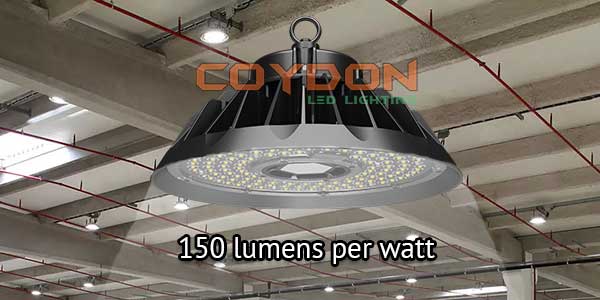
A lot of plant managers look at fixture specs without knowing what those numbers mean for monthly costs. Luminous efficacy simply shows how much real light you get for every watt. Understanding this basic ratio helps you spot energy waste on your shop floor instantly.
Old metal halide fixtures are terrible at converting power into actual light. Legacy metal halide lamps usually output just sixty to eighty lumens per watt. A massive chunk of that expensive electricity gets turned into useless heat instead of room brightness.
The KD-HBD series UFO LED high bay from Coydon Lighting hits one hundred fifty lumens per watt right out of the box. That is nearly double the light output of older fixtures using the exact same power.
Running fixtures at one hundred fifty lumens per watt means getting top level brightness while cutting energy bills almost in half. For example, you can swap out an old four hundred watt metal halide for a two hundred watt LED module. Your work floor gets the exact same light level while pulling half the electricity every single hour. It is that simple.
Upgrading to one hundred fifty lumens per watt fixtures stops electric meters from spinning so fast. Making this switch keeps serious money in your monthly operating budget year after year.
2.1 Lumens vs. Watts: Decoupling Brightness from Power Consumption
A lot of plant managers still confuse lumens with watts when shopping for new factory lights. Watts only measure electrical power drawing straight from your utility line every hour. Lumens measure the actual volume of usable light hitting your shop floor.
Pulling higher wattage does not guarantee a brighter workspace for your warehouse crew. Older legacy lamps draw high wattage while wasting most of that electricity as useless heat. Decoupling brightness from power consumption is the real secret to lowering monthly factory electric bills.
High efficacy fixtures change this whole math completely for facility leaders. They deliver maximum lumen output while keeping power draw as low as possible. You no longer need heavy, power hungry lights to keep busy production lines bright.
Modern high efficacy LED fixtures let you drop fixture wattage way down without sacrificing floor illumination. Your manufacturing plant maintains the exact same lux levels required for safe worker operation and quality inspection. Yet your hourly kilowatt consumption drops immediately after installation.
Replacing wasteful fixtures with high efficacy LEDs gives you full control over rising energy expenses. You get crisp, clean illumination across every single aisle without paying for wasted power. Focusing on lumens instead of watts protects your plant operating budget for years down the road. Smart facility managers choose real light output over raw power draw every single time. Making this simple switch pays off very quickly for any industrial business.
2.2 The Engineering Behind KD-HBD: Premium Optics and Thermal Management
Delivering a stable one hundred fifty lumens per watt takes serious engineering precision. Coydon Lighting built the KD-HBD series high bay fixture from the ground up for harsh industrial environments. Every component inside this luminaire works together to guarantee high efficiency and a long operational lifespan.
It all starts with top tier LED chips mounted on heavy duty circuit boards. These premium chips produce maximum lumen output while generating far less waste heat. Combined with high efficiency drivers, the system ensures stable power delivery without energy loss or light flicker.
However, heat remains the biggest enemy of LED performance over time. Without proper thermal management, even the best chips quickly lose brightness and fail early. That is why Coydon uses a heavy duty die-cast aluminum heat sink for cooling.
This aluminum housing features specialized thermal fins that maximize surface area. Natural convection draws heat away from the sensitive LED engine rapidly during long production runs. Keeping internal operating temperatures low prevents thermal degradation and preserves high light output year after year.
Precision optical lenses protect the light engine while directing output exactly where workers need it. Premium optical materials eliminate glare and eliminate light waste across high ceiling warehouses.
By combining premium chips, reliable drivers, and die-cast aluminum cooling, the KD-HBD series delivers unmatched reliability. Industrial facilities get a solid lighting solution that maintains one hundred fifty lumens per watt over tens of thousands of hours. Investing in engineered quality keeps your facility bright while cutting maintenance costs down to zero.
3. Why 150 lm/W is the Optimal Sweet Spot for Warehouse Operations
Chasing the highest possible specs sounds great on paper for busy plant managers. However, pushing LED efficacy past one hundred fifty lumens per watt creates huge diminishing returns. For modern industrial warehouse operations, one hundred fifty lumens per watt represents the absolute optimal sweet spot.
Going beyond one hundred fifty lumens per watt requires overdriven LED chips and ultra thin phosphor layers. These fragile optical setups generate excess internal heat and shorten overall fixture lifespan significantly. They also cost way more upfront while offering very little additional energy savings every month.
On the flip side, older fixtures rated below one hundred thirty lumens per watt waste way too much power. They force your industrial facility to pay high utility bills every single month unnecessarily. Choosing low efficacy lamps simply drags down your long term factory operating margins.
Hitting one hundred fifty lumens per watt strikes the perfect engineering balance for facility owners. It gives plant managers near double the light output of older legacy fixtures while keeping initial purchase costs very reasonable. Payback periods stay fast, often under twelve months for high ceiling facilities.
This precise efficiency level also keeps internal operating temperatures low inside the die-cast aluminum housing. Components run much cooler during long production shifts, preventing color shift and early driver failure completely. Your warehouse facility gets rock solid reliability without risking sudden maintenance downtime.
Smart warehouse owners do not waste money on fragile experimental lighting technology. They choose a proven one hundred fifty lumens per watt rating to maximize ROI and keep operating expenses low. It is simply the most practical and reliable lighting solution for modern industrial plants today. Upgrading to this balance protects your bottom line for many years down the road.
4. Real-world case study: retrofitting 46 units with 150W KD-HBD
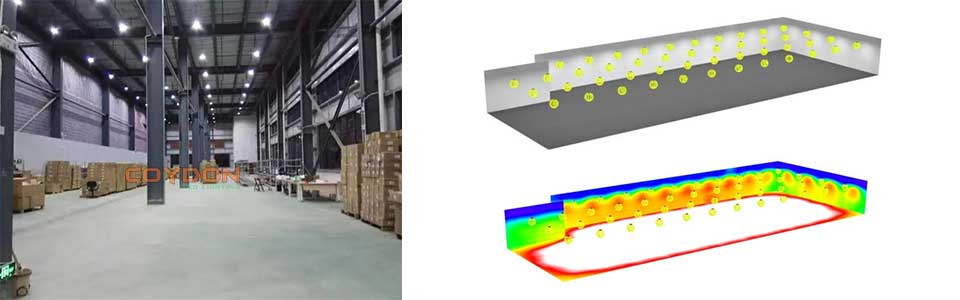
The calculation report: UFO LED high bay lights 150 watt x 46 piece ( Project 02 )
Deploying high-efficacy LED lighting delivers immediate operational benefits for modern busy logistics centers. Examining real performance figures from an active facility proves the practical energy efficiency of professional industrial fixtures. A heavy-duty logistics warehouse currently relies on Coydon Lighting high bays to illuminate its main storage operations.
The interior lighting layout features forty-six units of one hundred fifty watt KD-HBD series UFO LED high bays. These robust fixtures are installed directly above active forklift transit lanes, high-capacity loading bays, and deep rack storage zones. The ceiling mounting height provides broad and continuous light coverage across all high-traffic working areas throughout daily operational shifts.
Operating forty-six units of one hundred fifty watt KD-HBD high bays maintains total system power demand at precisely six point nine kilowatts. Electric power meters on-site confirm remarkably low utility draw even during peak operational hours. Facility managers benefit from minimal baseline power consumption without sacrificing necessary shop floor illumination.
Optimum energy efficiency represents only one aspect of this active warehouse installation. The real floor illumination quality remains consistently high across every single storage aisle. On-site light meter readings confirm elevated average lux levels throughout the entire storage building.
The specialized high-efficacy optics eliminate dark shadows between tall storage racks, harsh visual glare, and color distortion. Precision beam distribution directs usable lumens straight down to the floor level without wasting light on upper ceiling walls. Forklift operators experience clear visual contrast down narrow aisles, making daily barcode scanning and inventory tracking tasks much faster and safer.
Furthermore, the heavy-duty aluminum heat sinks prevent thermal stress on internal driver components. Integrated cooling fins dissipate operational heat effectively during long continuous working shifts. This efficient thermal management guarantees stable lumen output over extended operating hours without premature component failures.
Facility engineers operate the building smoothly without disrupting daily workflow for high-altitude maintenance tasks. Using KD-HBD high bays creates a bright, safe, and highly cost-effective environment for daily logistics activities. The facility maintains lower monthly utility expenses while boosting overall workplace safety and handling speed. This real-world installation proves that Coydon LED lighting delivers superior practical performance for demanding industrial spaces.
5. Theoretical Cost-Benefit Model: Evaluating a Standard 30-Fixture Setup
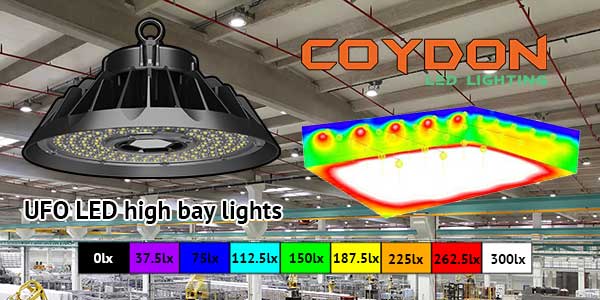
The Dialux Report:
30 PCS 200 Watt UFO LED high bay lights

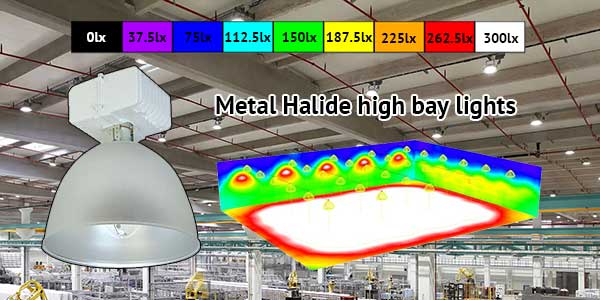
The Dialux Report:
30 PCS 400 Watt Metal Halide high bay lights
Annual Financial & Energy Cost-Benefit Model (30-Fixture Baseline)
| Cost & Energy Metrics | Legacy 400W Metal Halide | Coydon 200W KD-HBD UFO LED | Net Savings & ROI |
| Actual Power Draw per Fixture | ~450 Watts (Includes Ballast) | 200 Watts | -250 Watts / Fixture |
| Total System Power Demand | 13.5 kW | 6.0 kW | -7.5 kW System Demand |
| Daily Power Consumption | 162 kWh / day | 72 kWh / day | -90 kWh Saved Daily |
| Annual Energy Consumption | 59,130 kWh / year | 26,280 kWh / year | -32,850 kWh Saved Yearly |
| Annual Electricity Cost | $8,869.50 | $3,942.00 | $4,927.50 Direct Savings/Year |
| Project Payback Period | Baseline Cost | Rapid Payback | Full ROI within 8–12 Months |
Assumptions: 30 Fixtures | 12 Hours/Day | 365 Days/Year | Electricity Rate: $0.15 / kWh
Evaluating a standard thirty-fixture facility setup makes calculating energy savings straightforward for plant managers. For this financial model, assume a typical factory operates twelve hours daily. We will use an average commercial electricity rate of fifteen cents per kilowatt-hour.
A standard setup with thirty traditional four hundred watt metal halide lamps consumes surprising amounts of energy. Counting internal ballast losses, each legacy fixture actually draws around four hundred fifty watts of power. Operating thirty legacy lamps at four hundred fifty watts equals thirteen point five kilowatts total load. Running this system for twelve hours daily adds up to nearly fifty-nine thousand kilowatt-hours annually. At fifteen cents per kilowatt-hour, keeping these thirty legacy lights on costs roughly eight thousand eight hundred seventy dollars every single year.
Replacing those old lamps with thirty units of two hundred watt KD-HBD LED fixtures changes the math completely. Thirty LED high bays pull a total load of just six kilowatts from your building electrical grid. Running those thirty LED fixtures for twelve hours daily consumes about twenty-six thousand kilowatt-hours per year. That drops your annual lighting bill down to just three thousand nine hundred forty-two dollars.
Upgrading to the KD-HBD series saves your facility nearly four thousand nine hundred twenty-eight dollars every year. That represents a direct energy cost reduction of over fifty-five percent annually. Beyond lower power bills, these LED fixtures eliminate constant maintenance and lamp replacement costs. Traditional metal halide bulbs burn out frequently and require expensive bucket truck rentals to replace overhead.
Factoring in initial purchase costs, most facility managers achieve full project payback within eight to twelve months. Every month after that payback threshold puts clean energy savings straight back into your company bottom line. Installing high efficacy fixtures remains one of the smartest operational investments any manufacturing plant can make today.
6. Beyond Efficacy: Smart Energy Control with Microwave Sensing & 1-10V Dimming
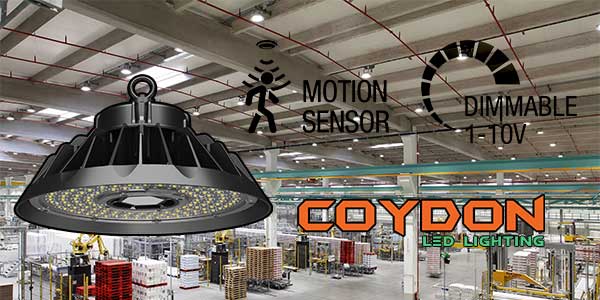
High luminous efficacy at one hundred fifty lumens per watt cuts baseline lighting power by over fifty-five percent. However, integrating smart energy controls into the KD-HBD high bay yields even deeper operational savings. Combining microwave sensing with 1-10V dimming delivers a powerful second wave of energy reduction for modern warehouses.
Traditional high bays run at full brightness all day, even across empty aisles or unused storage zones. Microwave motion sensors solve this problem by detecting movement across wide areas, even through light non-metal obstructions. When workers leave an aisle, the sensor signals the fixture to dim smoothly down to low background levels.
The built-in 1-10V dimming capability allows precise output tuning rather than harsh on and off cycling. Fixtures ramp up instantly when forklifts enter an aisle and dial back automatically when motion stops. This dynamic control prevents unnecessary power draw during quiet shifts while keeping safety illumination active.
Smart control also extends driver life by reducing internal thermal stress during long operating hours. Components run cooler when fixtures operate at dimmed levels for several hours each day.
Adding intelligent controls turns high efficacy fixtures into an active, automated energy management network. Plant managers maximize utility rebates while cutting overall power costs far beyond basic LED retrofits. Smart sensing makes your lighting setup work only when and where your workers actually need it.
6.1 High-Ceiling Motion Sensing: Why Microwave Trumps PIR in Industrial Spaces
High ceiling warehouses present unique environmental challenges for standard motion sensors. Traditional passive infrared sensors rely strictly on clear line of sight heat signatures from passing personnel. High ambient temperatures, airborne dust, and high mounting positions often cause passive infrared units to miss movement completely.
In high bay warehouse applications, microwave sensors outperform older passive infrared technology consistently. Microwave sensors emit high frequency radar pulses that penetrate dust, storage boxes, and light obstructions effortlessly. They detect fast moving forklifts and warehouse crew members instantly, even when mounted thirty feet high.
Coydon Lighting integrates advanced microwave motion sensing directly into the KD-HBD series high bay fixture. In typical high rack storage aisles, material traffic flows in quick bursts rather than continuous streams. Keeping fixtures at full output across empty storage aisles wastes a massive amount of power every single day.
With smart microwave detection, the KD-HBD operates on an automated dual stage dimming profile. When a storage aisle stays empty, the sensor dims the light down to ten or twenty percent power. This low background mode preserves safety visibility while pulling minimal electricity from your grid line.
The moment a forklift driver or worker enters the aisle, the microwave sensor triggers immediate hundred percent output. Illumination ramps up smoothly without annoying delays, cold start pauses, or visible flicker. Once the work crew leaves the aisle, the fixture quietly returns to its low standby mode after a short delay.
Upgrading to microwave sensing ensures rock solid motion detection at extreme mounting heights. Your warehouse facility maintains crisp visibility during busy shifts while slashing background lighting costs during quiet hours.
6.2 Dynamic Daylight Harvesting with 1-10V Dimming Control
Lots of modern manufacturing plants and logistics hubs feature roof skylights to let natural sunlight hit the shop floor. Fixed output high bays keep drawing full power anyway, no matter how bright the sun gets outside. Combining daylight harvesting with 1-10V dimming control stops this energy waste automatically.
The KD-HBD high bay pairs photo sensors straight to its 1-10V dimmable driver. These small sensors track ambient light levels across active work areas during the day. When bright sunshine streams through warehouse skylights, the sensor tells the driver to scale back output right away.
The system does not just shut lights off completely. Instead, the 1-10V control smoothly dials back wattage to hit target light levels on the floor. On bright sunny days, fixtures might only pull twenty or thirty percent power. When a heavy cloud rolls over or night falls, the lights dial back up to keep floor brightness steady. It works seamlessly.
Your workers get uniform light on every shift without jarring light changes or flicker. Visual inspection teams get ideal workplace visibility while your plant takes full advantage of free daylight. You save money effortlessly.
Running high bays at lower power during daytime brings huge mechanical benefits too. Running drivers and LED chips well below max wattage reduces internal heat build up inside the housing. Cooler operating temperatures keep drivers from wearing out early, preserving light output for years down the road.
Smart plant managers love this dynamic setup. You trim monthly power bills even further while making your high bays last way longer. It is a win for your budget and operations.
7. How Coydon Lighting Guarantees Your Results: Free Dialux Simulation Services
Buying new industrial LED high bays can feel like a risky gamble for facility buyers. Many plant owners worry whether new fixtures will deliver enough real floor lux after completing a big lighting retrofit. At Coydon Lighting, we take all the guesswork out of your lighting project before you spend a single dollar.
We offer free professional Dialux simulation services for every single engineering project. Our technical team builds a precise three-dimensional digital model of your facility layout before factory production starts. We factor in exact ceiling height, wall reflectance, mounting positions, and rack placement across every aisle.
Whether you need thirty fixtures, forty-six units, or hundreds of high bays, Dialux calculates exact light distribution. The software generates a detailed heat map showing target foot-candles and lux levels across your shop floor. You get a clear visual guarantee that your work areas will hit proper lighting standards every time.
This preview prevents costly ordering mistakes and layout errors long before installation even begins. You can see exact fixture counts, beam angle options, and spacing needed to eliminate dark spots and harsh shadows. It gives your company management team complete confidence in your lighting budget decisions.
Coydon Lighting believes buying industrial fixtures should be straightforward, transparent, and completely stress free. Our free Dialux service ensures your plant gets optimum floor brightness and uniform coverage every single time. You know your exact operational results long before the first fixture gets delivered to your door. That is how we protect your investment.
7.1 What Is Included in Your Custom Dialux Lighting Report?
Our custom Dialux lighting report gives you a complete clear roadmap before buying any new industrial fixtures. It eliminates guesswork by providing precise visual proof of how your plant floor will look after installation.
- First, the report includes full three dimensional false-color rendering maps of your facility space. These color-coded diagrams show exact lux intensity across every aisle, production line, and storage zone. You can easily spot bright zones and identify potential dark corners before hanging a single light.
- Second, we provide exact mounting height and fixture layout recommendations tailored to your building setup. The report details optimal spacing between high bays to ensure balanced beam overlap and eliminate harsh shadows. You get clear installation instructions that your local electrical contractors can follow directly.
- Finally, you receive a full summary of technical illumination metrics across your entire work floor. The report lists average lux levels, overall uniformity ratios, and total power density per square foot. These verified figures prove that your facility will meet all occupational safety and industrial lighting standards.
Every Dialux report is custom built by Coydon Lighting engineers for your specific site needs. It gives your management team total clarity, eliminating unexpected surprises and ensuring a smooth lighting upgrade.
8. Conclusion: Upgrade Your Industrial Lighting with Coydon’s KD-HBD

Upgrading your warehouse illumination with the Coydon KD-HBD series UFO LED high bay is a smart operational decision. Delivering a high-efficacy output of one hundred fifty lumens per watt, this fixture slashes baseline energy consumption instantly. It cuts monthly power bills by over fifty-five percent compared to outdated metal halide lamps.
Smart energy management takes savings even further for facility managers. Built-in microwave motion sensing and 1-10V dimming allow your lights to adjust automatically based on foot traffic and natural sunlight. You get precise dynamic illumination that works only when and where your workforce needs it.
At the same time, real floor visibility and overall light uniformity improve dramatically across every work aisle. High-quality die-cast aluminum heat sinks keep internal components cool, guaranteeing long operational lifespans with zero maintenance hassle.
Coydon Lighting removes all project risk by providing free custom Dialux 3D simulations before you place an order. You can verify your exact floor lux levels and layout spacing beforehand with complete confidence. Upgrade to the engineered reliability of KD-HBD high bays today to protect your facility bottom line.
8.1 Ready to Cut Your Energy Bills? Request Your Free Dialux Plan Today
Slashing your facility operating costs starts with one simple step. Stop letting outdated, power-hungry high bays drain your monthly maintenance budget unnecessarily. The Coydon Lighting engineering team is ready to help you build a brighter and far cheaper facility today.
Getting started on your upgrade project is fast, easy, and completely free of charge. Simply click the “Inquiry Now” button anywhere on this page to contact our lighting specialists. Send us your basic warehouse dimensions, ceiling height, and current fixture count.
Our team will generate a custom 3D Dialux simulation report tailored specifically to your layout. You will see exact foot-candle levels, layout spacing, and predicted annual energy savings before buying anything.
We will also include a competitive wholesale factory quote for your KD-HBD series LED high bays. Take full control of your facility overhead expenses right now. Reach out to Coydon Lighting today and request your free Dialux lighting design plan!
Frequently Asked Questions

Can microwave sensors detect motion through warehouse storage racks or packaging?
Yes, they handle this easily. Unlike PIR sensors that need a direct line of sight, microwave sensors use radar bouncing. They punch right through dust layers, plastic wrap, and cardboard boxes. This means fast moving forklifts trigger the lights way before rounding a tight corner.
What site details do I need to send to get a free Dialux report?
Just send us your basic room dimensions. We need building length, width, ceiling height, and how many lights you run now. A rough napkin sketch or floor plan works fine too. No heavy engineering CAD files needed.
How fast can your team send back my custom Dialux report?
Our lighting engineers usually send back full 3D Dialux plans within 24 to 48 hours. You get the report fast so your team can make quick budget decisions without project delays.
Is a 150 lm/W light fixture reliable in hot factory environments?
Yes, it runs great in tough plants. We pair the 150 lm/W efficacy with heavy die-cast aluminum heat sinks. Keeping internal electronics cool protects the driver and stops light decay, even during hot summer shifts.
Can we manually change light levels after installing 1-10V dimming?
You get total flexibility here. The 1-10V setup lets sensors dim lights automatically, but you can still wire in manual wall dimmers. Facility managers keep full control over floor brightness across every working shift. Simple as that.