What wattage LED high bay lights do I need

Table of Contents
Introduction
You have a warehouse, factory, or large commercial space. You know you need LED high bay lights. But you stop at the first question. What wattage do I actually need?
It seems simple. It is not.
Pick the wrong wattage and you face real problems. Lights that are too weak create dark spots. Workers strain to see. They misread labels. They trip over pallets. Small mistakes become safety risks. Productivity drops. Your team cannot work efficiently when they cannot see clearly.
Pick the wrong wattage on the high side and the problem flips. You now pay for light you do not need. Higher wattage means higher energy use. Those extra kilowatt-hours add up month after month. Over five years, that mistake costs thousands of dollars in wasted electricity.
The old way of choosing lights made sense once. A 400W metal halide fixture was brighter than a 250W one. Everyone knew that. Wattage equaled brightness. Simple math.
LED technology broke that rule completely.
This leaves buyers frustrated and confused. They guess. They hope. They often get it wrong.
This guide ends the guesswork. You will learn exactly how to calculate your lighting needs based on your space and how you use it. We include real data from actual installations. You will see side-by-side comparisons that show what different wattages actually deliver.
After reading this, you will know what wattage your facility needs. No more uncertainty. No more expensive mistakes. Just clear answers based on facts, not feelings.
Part 1. Lumens and Efficacy: The Two Numbers That Matter Most
1.1 Why “Watts” is a Misleading Metric in the LED Era
I see this mistake every week. Someone calls me about lights for their warehouse. They say they need 200W fixtures because that is what they always bought. I ask them what lights they have now. Metal halide, they say. 400 watts.
Here is the thing. They are comparing the wrong numbers.
Wattage only tells you one thing. How much power the light uses. That is it. A 150W fixture draws 150 watts from your electrical panel. The number does not tell you if the space will be bright enough to work in.
Think about trucks for a second. Two trucks can both have 300 horsepower. One might be a empty flatbed. The other might be pulling a fully loaded trailer. They move completely different even though the engine power is the same.
Lights work the same way. Two 150W fixtures from different companies can give you totally different light levels. One company uses quality LEDs and good design. The other uses cheap parts. Both pull 150 watts from the wall. Only one lights up your space well.
I talk to buyers all the time who got burned by this. They bought 150W fixtures online because the price looked good. They installed them and wondered why the warehouse still felt dark. The fixtures were pulling 150 watts just fine. They just were not putting out much light.
So what actually tells you how bright a light will be? Lumens.
Lumens measure light output. Pure and simple. A fixture rated at 20,000 lumens gives you twice as much light as one rated at 10,000 lumens. Does not matter who made it. Does not matter what technology it uses. Lumens are lumens.
Here is where LED changed everything. Lumens per watt tells you how efficient a light is. How much light you get for each watt of power.
Old metal halide lights give you maybe 60 to 80 lumens per watt. Fluorescent does a little better at 70 to 100. Good LED fixtures today give you 130 to 160 lumens per watt. Some go even higher.
Run those numbers and you start to see why wattage comparisons fail.
A 150W metal halide fixture gives you maybe 9,000 to 12,000 lumens. A 150W Coydon LED fixture gives you over 22,000 lumens. Same wattage on the label. Almost twice the light in the space.
Flip it around. A 400W metal halide fixture gives you about 24,000 to 32,000 lumens. A 200W Coydon LED gives you over 30,000 lumens. Half the power draw. Same light level.
This is why I tell people to stop shopping by wattage. Your space does not care how many watts you use. It only cares how much light reaches the floor. Your workers care about seeing clearly. Your electric bill cares about how much power you use. Wattage alone tells you nothing about either.
Figure out how many lumens your space actually needs. Then find fixtures that deliver those lumens efficiently. That simple shift changes everything about how you buy lights.
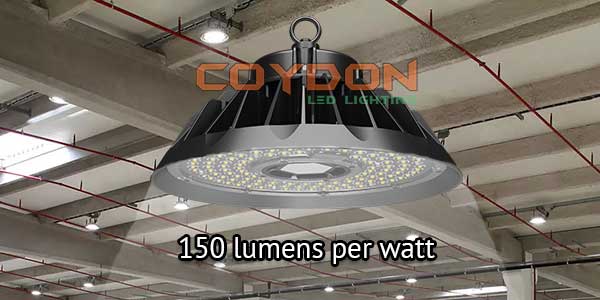
Coydon builds lights around this idea. Our KD-HBD series hits 150 lumens per watt using good OSRAM chips. That efficiency lets us replace a 400W metal halide with a 200W LED. Same light. Half the electricity.
1.2 The Only Metric That Matters: Lumens and Luminaire Efficacy
I had a customer call me last week about lights for his shop. He kept asking about 150W or 200W. That is what he knew. That is how he bought lights for twenty years. I asked him how bright he wanted the space. He did not know how to answer.
That call stuck with me because it happens so often. People focus on wattage because that is what they learned growing up. 60W for a lamp. 100W for the garage. It made sense back then because every bulb worked the same way.
Wattage never actually told you how bright a bulb was. It told you how much power it used. The brightness just happened to match up because everyone used the same bulbs. Same technology. Same efficiency. Simple times.
LEDs changed that completely. Now two fixtures with the same wattage can give you totally different light levels. One might light up a whole warehouse. Another might leave half your shop dark. Same wattage on the label. Different results in your building.
So what number should you look at instead? Lumens.
Lumens measure the light that actually comes out of the fixture. That is what hits your floor. That is what your workers see by. A fixture rated at 20,000 lumens gives you twice as much light as one rated at 10,000 lumens. Simple and honest.
Think about it like filling a tank with gas. You care how many miles you get. You do not care how hard the engine works to move the car. Lumens are the miles. Wattage is how hard the engine works.
Now we get to efficacy. Efficacy tells you how many lumens you get for each watt you pay for. High efficacy means you get more light for the same electricity cost. Low efficacy means you are burning power without getting much light back.
Here is a real example. Two fixtures both run at 150 watts. One puts out 15,000 lumens. The other puts out 22,500 lumens. Your electric meter spins the same speed for both. But one space is fifty percent brighter than the other. That fifty percent is efficacy at work.
Coydon builds fixtures with high efficacy because electricity keeps getting more expensive. Our KD-HBD series uses OSRAM SMD 2835 chips. These are solid chips from a company with a good reputation. They help us hit 150 lumens per watt consistently.
Let me put some numbers together so you see what that means for your building.
A 150W Coydon fixture puts out about 22,500 lumens. That is 150 times 150. Pretty straightforward.
Now look at a cheaper fixture you might run across online. Maybe it only manages 100 lumens per watt. A 200W version of that cheap fixture puts out 20,000 lumens. That is 200 times 100.
Here is where it gets interesting. The Coydon fixture uses 50 fewer watts than the cheap one. But it puts out 2,500 more lumens. Less power from the grid. More light on your floor. That fifty watts does not seem huge until you multiply by thirty fixtures running twelve hours a day for a year. Then it becomes real money.
Now compare to the old lighting you might be replacing. Metal halide fixtures run about 60 to 80 lumens per watt when they are new and clean. A 400W metal halide might give you 28,000 lumens on a good day. A 200W Coydon LED gives you over 30,000 lumens. Half the power draw. Same or better light.
I have watched warehouses cut their lighting power in half just by switching from old metal halide to good LEDs. Same brightness on the floor. Half the electric bill. That money stays in the business instead of going to the utility company.
The KD-HBD series hits 150 lumens per watt because we do not cut corners. OSRAM chips are proven. The drivers match the load properly. The optics send light down where you need it instead of wasting it sideways or up at the ceiling. Some fixtures claim high lumens but the light goes everywhere except where your workers are standing. That does not help anyone.
So when you go looking for lights, ask for two numbers. Lumens and lumens per watt. If a seller cannot tell you both, go find another seller. If the lumens per watt number is low, your electric bill will be high. It really is that simple.
1.3 How to Calculate Your Total Lumen Requirement in 3 Simple Steps

I talked to a guy last month who was putting lights in a new shop. He had the ceiling height measured. He knew the square footage. He just did not know how to turn that into a light count. He was guessing.
Guessing works sometimes. Usually it does not. Too many lights and you waste money. Too few and you work in the dark. Neither one is good.
Here is a better way. Three steps. Basic math. You can do it yourself.
Step 1. Figure out your square footage
Get a tape measure. Measure the length of your building in feet. Measure the width. Multiply them together.
If your building is 80 feet long and 40 feet wide, that is 3,200 square feet. Write that number down.
If your building is not a perfect rectangle, break it into rectangles. Measure each one. Add them up. Close enough works here.
Step 2. Decide how bright you need it
Different work needs different light. Storage needs less than assembly. Aisles need less than loading docks.
Lighting people measure brightness in foot-candles. One foot-candle is about how bright a candle looks from one foot away. Old fashioned but it works.
Here are numbers I have seen work well for different spaces.
- Storage areas where people just drive forklifts and read labels need 10 to 30 foot-candles. On the low side if it is just racks. On the higher side if people walk through.
- General warehouse work where people pick orders and move boxes runs 30 to 50 foot-candles. This is the most common range I run into.
- Workshops where people use tools and build things need 50 to 75 foot-candles. More light means fewer mistakes.
- Assembly lines and inspection areas need 75 to 100 foot-candles. Detail work needs bright light. People checking parts or reading small print fall here.
- Loading docks need 50 to 75 foot-candles. Trucks backing in and freight moving around need good visibility for safety.
These numbers come from groups that study lighting. IES and OSHA put out guidelines. They are based on real data from real workplaces.
Pick the number that matches what you do. If you have different areas doing different things, use the highest number for your whole space. You can always dim lights later. You cannot add light later without buying more fixtures.
Step 3. Multiply and get your number
Take your square footage. Multiply it by the foot-candles you picked.
Say you have a 3,200 square foot warehouse used for general storage. You pick 30 foot-candles. Three thousand two hundred times thirty is 96,000 lumens. That is your target.
Say you have the same size building used for assembly work. You pick 75 foot-candles. Three thousand two hundred times seventy-five is 240,000 lumens. Much higher number because the work needs more light.
This total is what your whole lighting system must produce. When you look at fixtures, you add up their lumens until you hit this number. Ten fixtures at 10,000 lumens each gives you 100,000 lumens. That covers the first example. For the second example you need more fixtures or brighter ones.
One more thing. This math assumes light spreads out evenly. Real buildings have racks and equipment that block light. Dark ceilings eat light instead of bouncing it down. So add about ten percent to your total to be safe. Better to have a little extra than to come up short.
That is it. Square footage times foot-candles equals total lumens. Write that number down. It is the only number that really matters when you start shopping.
Part 2. Coydon KD-HBD Series: Engineered for Your Exact Needs
2.1 Coydon Lighting KD-HBD Series: Engineered for Optimal Performance
100 Watt
KD-HBD-W100-1
Ø248mm X 129mm
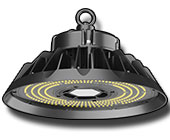
150 Watt
KD-HBD-W150-1
Ø295mm X 140mm
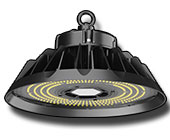
200 Watt / 240 Watt
KD-HBD-W200-1 / KD-HBD-W240-1
Ø320mm X 154mm
| Input Voltage: | AC 90V – 305V |
| Colour Temperature: | 3000K / 4500K / 6000K |
| Color Rendering Index: | 80+ |
| LED Type: | LED SMD 2835 ( OSRAM ) |
| IP Grade: | IP65 |
| Material: | Aluminium + PC Lens |
| Luminous Efficiency: | 150 Lumens per watt |
| Beam Angle: | 60° / 90° / 120° |
| Warranty: | 5 Years |
| Mounting Height: | 100 Watt: 15–20 ft (4.5–6 m) 150 Watt: 20–30 ft (6–9 m) 200 Watt: 30–40 ft (9–12 m) 240 Watt: 40–50 ft (12–15 m) |
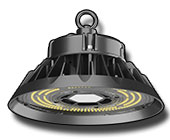
Same style. Different sizes. The 100 watt. The 150 watt. The 200 watt. The 240 watt.
I show these pictures and data to customers when they ask what they should buy. They know their ceiling height. They know their square footage. They just need someone to tell them which one works.
Let me walk through what these lights do.
First. How much light you get.
These lights give you 150 lumens per watt. That number matters more than the wattage on the box.
A 150 watt fixture puts out about 22,500 lumens. A 200 watt puts out about 30,000. That is just math. Wattage times 150.
I had a customer last week who was looking at cheap lights online. Same wattage. Only 100 lumens per watt. His 200 watt cheap light would give him 20,000 lumens. Our 150 watt gives him 22,500. Less power from his meter. More light in his building.
He asked why anyone would buy the cheap ones. I told him some people only look at price. They do not look at what they actually get for their money.
Second. Beam angles and ceiling height.
Look at the mounting heights on that picture. 15 to 20 feet. 20 to 30 feet. 30 to 40 feet. 40 to 50 feet.
The beam angle changes how light spreads. 120 degree for lower ceilings. Spreads wide so you do not get dark spots between fixtures. 90 degree for medium heights. Good balance. 60 degree for tall ceilings. Keeps light focused so it reaches the floor instead of spreading out and fading.
I talked to a guy with a warehouse last month. Forty foot ceilings. He was going to buy wide beam lights because that is what he always bought. I told him wide beam at forty feet means half your light hits the walls before it gets to the floor. He needed narrow beam to push light down where his forklifts run.
He changed his order. Saved him from buying twice as many fixtures to fix a bad beam choice.
Third. Built for real buildings.
IP65 rating means dust does not get in. Water does not get in. You can hose these things off if you need to.
The housing is aluminum. Aluminum pulls heat away from the LEDs. Heat is what kills LEDs. Keep them cool and they run for years. The lens is polycarbonate. Does not yellow or get brittle like some plastics do.
I have seen cheap lights fail in eighteen months. Dust gets inside. Moisture gets inside. LEDs overheat. They dim out or just stop working. Then you pay for new lights and pay someone to change them.
These are built to hang and run and not be a problem.
Fourth. Options that save more money.
Microwave sensor. It detects movement. Lights come on when someone walks in. They dim down when the space is empty. If you have areas that are not staffed all the time, this stops wasting power.
No switches. No timers. Just works.
One to ten volt dimming. Hook it to daylight sensors. Sunny day with light coming through windows? Lights dim down. Cloudy day? Lights come up full.
I had a customer put sensors in his warehouse. Cut his lighting power another twenty five percent on top of what he saved switching from metal halide. That is real money every month.
Fifth. The real world comparison.
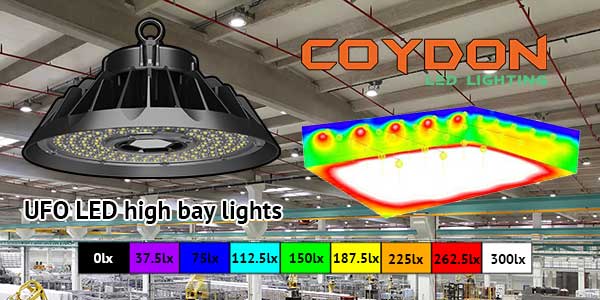
PDF file: 30 PCS 200 Watt UFO LED high bay lights
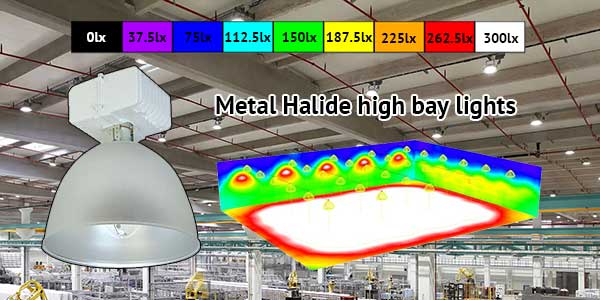
PDF file: 30 PCS 400 Watt Metal Halide high bay lights
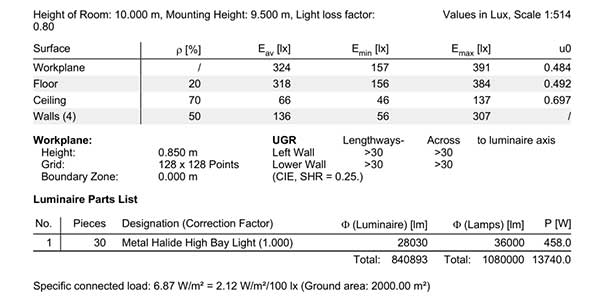
Look at the numbers from actual projects. Thirty 200 watt Coydon LEDs in a building. Thirty 400 watt metal halides in the same size building.
The LEDs use 6,120 watts total. The metal halides use 13,740 watts. Same number of lights. Same brightness on the floor. Less than half the power.
That is not a theory. That is real data from real installations.
So when you look at that picture of the four lights, you are not just looking at fixtures. You are looking at different tools for different jobs. Pick the one that fits your ceiling. Pick the beam that matches your height. Add sensors if they make sense for how you use the space.
That is how you get light that works and power bills that do not hurt.
2.2 Real-World Proof: Why Wattage Comparison is Obsolete
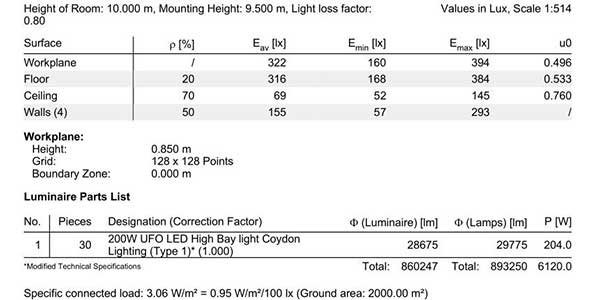
PDF file: 30 PCS 200 Watt UFO LED high bay lights
PDF file: 30 PCS 400 Watt Metal Halide high bay lights
Two sets of lights in the same building. Same size space. Same ceiling height. Same number of fixtures. One set was old technology. One set was new.
The building is 50 meters by 40 meters. Ten meter ceilings. Thirty lights total.
Here are the numbers from that comparison.
| Lighting fixture: | Metal Halide high bay light 400W | Coydon UFO LED high bay light 200W |
| Number of fixtures: | 30 | 30 |
| Power per fixture: | 458 Watt | 204 Watt |
| Total power draw: | 13,740 Watt | 6,120 Watt |
| Total light output: | 840,000 Lumens | 860,000 Lumens |
| Average light on floor: | 324 Lux | 322 Lux |
| Power per 100 lux | 2.12 Watt | 0.95 Watt |
Look at that bottom number. That is what really matters. How much power you burn for every bit of light you actually get on the floor.
The metal halides burn 2.12 watts to light up the space. The Coydon LEDs burn 0.95 watts. Same building. Same light level. Less than half the power.
I have seen this same pattern play out in warehouse after warehouse. People running old lights are burning power they do not need to burn. They just do not know it yet.
The power difference.
Thirty metal halides pull 13,740 watts from the grid. That is enough to run a small house.
Thirty Coydon LEDs pull 6,120 watts. That is a difference of 7,620 watts every hour they are on.
Run those lights twelve hours a day. Five days a week. Fifty weeks a year. That is 22,860 hours of operation. Multiply by the watt difference. You get over 174,000 kilowatt hours saved every year.
At twelve cents per kilowatt hour, that is nearly twenty one thousand dollars. Every single year.
The light difference.
Here is the part that surprises people. The metal halides put out 840,000 lumens total. The Coydon LEDs put out 860,000. Slightly more light from the LEDs.
The average light level on the floor is 324 lux from the metal halides. 322 from the LEDs. Basically identical. If you stood in that building, you could not tell which lights were which by looking at the floor.
Same light. Half the power.
Why the old lights waste so much?
Metal halide fixtures lose light in several ways. The bulbs themselves only give about 60 to 80 lumens per watt when they are new. They get dimmer as they age. After a year, they might be down thirty percent.
The fixtures also trap light inside. Some of that light never reaches the floor. It bounces around inside the reflector and turns into heat.
LEDs put light where you need it. The chips are efficient right out of the box. They stay efficient. The optics aim light down instead of sideways.
What this means for a real business.
Say you have a building this size. You are running thirty metal halides right now. You pay for 13,740 watts every hour the lights are on.
Switch to thirty Coydon LEDs. Same number of fixtures. Same mounting spots. Same light on the floor. Your power draw drops to 6,120 watts.
That is 7,620 watts you stop paying for every hour.
In one year, you save enough to pay for the new lights. Every year after that is pure savings.
The numbers do not lie.
I have run this comparison many times. Different buildings. Different heights. Different layouts. The results always come out the same. LEDs use half the power to deliver the same light.
Some people think they need to keep their old lights because they already paid for them. But they keep paying for them every month on their electric bill. At some point, the old lights cost more to run than new lights cost to buy.
For most buildings, that point passed years ago.
This is not theory. This is actual data from real DIALux simulations run on real buildings. Thirty lights each. Same space. Same layout. Different technology. Half the power.
You can see why I show customers this report when they ask about switching.
2.3 Selecting the Right Coydon LED High Bay for Your Specific Ceiling Height
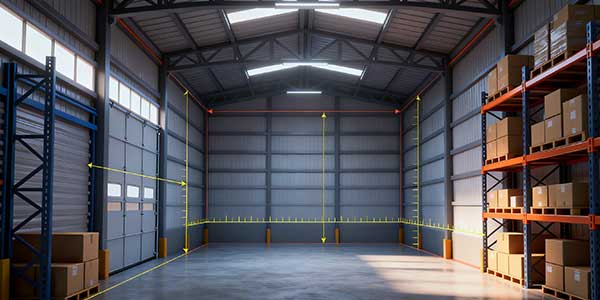
People ask me all the time which light they should buy. They know their ceiling height. They just want a straight answer.
Here is a simple guide based on the picture above.
| Ceiling Height | Coydon KD-HBD Model | Typical Lumens |
| 15–20 ft (4.5–6 m) | 100 Watt | ~15,000 lm |
| 20–30 ft (6–9 m) | 150 Watt | ~22,500 lm |
| 30–40 ft (9–12 m) | 200 Watt | ~30,000 lm |
| 40–50 ft (12–15 m) | 240 Watt | ~36,000 lm |
This table gives you a place to start. It is not the final answer but it gets you close.
How this works in real buildings.
A shop with sixteen foot ceilings needs different lights than a warehouse with forty foot ceilings. The lower ceiling lets light spread out wider. You can use wider beam angles and lower wattage fixtures. The higher ceiling needs more power to push light down to the floor.
- The 100 watt model works for most standard garage and small workshop ceilings. Fifteen to twenty feet is common in older buildings and smaller commercial spaces.
- The 150 watt covers the next range. Twenty to thirty foot ceilings show up in warehouses and medium sized factories. This is probably the most common range I deal with.
- The 200 watt handles thirty to forty feet. Big box stores. Large distribution centers. Gymnasiums.
- The 240 watt is for tall spaces. Forty to fifty feet. Aircraft hangars. Large event spaces. Some manufacturing facilities.
These numbers are starting points.
Every building is different. Wall colors change how light bounces around. Dark floors soak up light. Light colored walls reflect it back down. Racks and equipment block light in some spots and not others.
The table gives you a rough idea. A 150 watt fixture in a 25 foot building will likely give you good light. But how many fixtures? Where do they go? How far apart should they be spaced? That depends on your exact layout.
This is where we help.
We run DIALux simulations for customers all the time. You send us your dimensions. Your ceiling height. Your wall colors. Your rack layout if you have one. We put it into lighting software and calculate exactly what you need.
The software shows where every fixture goes. How far apart to space them. What beam angle works best. What light level you get on the floor.
No guessing. No hoping it works out. Just real numbers from real calculations.
I had a customer last month with a 35 foot building. He looked at the table and thought he needed 200 watt fixtures. We ran his numbers and found 150 watt fixtures with narrow beam optics gave him plenty of light. Saved him money on every fixture and lower power bills forever.
Another customer with a 22 foot building thought 100 watt would work. We ran his numbers and he actually needed 150 watt because his walls were dark and his floor absorbed light. Better to know that before you buy than after.
The table gets you close. The simulation gets you exact.
You can use the guide above to start thinking about what you might need. Then let us run the numbers to confirm.
Same building. Same ceiling height. Different layouts can need different solutions. That is why we do this for free. Get it right the first time. No waste. No regrets.
Part 3. Let Us Do the Math: Free DIALUX Design for Your Building
3.1 Beyond the Basics: Don’t Forget These Critical Factors
I left out a couple things in the sections above. Not on purpose. Just focused on the main numbers. But there are two other things you should think about before you buy.
Color temperature matters more than you think.
Lights come in different colors measured in Kelvin. Lower numbers like 3000K give off a warm yellow light. Looks like old incandescent bulbs. Higher numbers like 5000K give off a crisp white light that looks like daylight.
I had a customer call me after installing 3500K lights in his shop. He said the place looked dim even though the lumens were right. I went out there. The lights were putting out plenty of light. But the warm color made everything look dull and tired.
He swapped them for 5000K. Same fixtures. Same lumens. The place looked twice as bright.
For work spaces like warehouses and factories and shops, stick with 5000K to 6500K. Cool white light helps people see details better. It makes colors look right. It keeps workers alert.
Storage areas can get away with 4000K if you prefer. But for anywhere people actually do things, go cool white.
The warranty tells you something important.
Anybody can sell you a light. Not everybody stands behind what they sell.
Cheap lights online often come with no warranty or maybe one year. That tells you something. The people selling them do not expect them to last.
Our KD-HBD series comes with a five year warranty. That is not just a number we picked. It means we built these fixtures to run for years without problems.
I have seen cheap lights fail in eighteen months. Dust gets inside. Drivers overheat. LEDs dim out. Then you pay for new lights and pay someone to change them. The warranty saves you from that.
Five years covers you if anything goes wrong (It’s not a man-made fault). We replace the fixture. You do not pay again.
Some customers ask why we offer five years when others offer one. Simple answer. We use better parts. OSRAM chips. Good drivers. Aluminum housings that pull heat away. All that adds up to lights that last.
The warranty is our way of putting money behind that claim. If we were wrong about how long these last, we would lose money replacing them. We are not wrong.
So when you look at lights, check the warranty. One year tells you one thing. Five years tells you something else. We put ours in writing.
3.2 Stop Guessing, Start Saving: Get Your Customized Lighting Plan Today
You went through the steps. You figured out your square footage. You picked your foot-candles. You calculated your total lumens. You looked at beam angles and color temps and warranties.
Now you know what you need. But knowing and buying are two different things.
The next step is getting a layout that actually works in your building. Not a guess. Not what worked for someone else. A real plan built for your exact space.
We do that for you. Free.
At Coydon Lighting, we do not just sell lights. We help you figure out what you need before you spend a dime.
Send us your numbers. Length. Width. Ceiling height. Tell us what you do in the space. Storage. Assembly. Manufacturing. Give us your wall colors if you know them. Tell us about racks or equipment that might block light.
Our team runs a DIALux simulation for your building. The same software lighting designers use for million dollar projects. It shows exactly where every fixture goes. How far apart to space them. What light level you get on every part of the floor.
No cost. No obligation. Just real data from real engineers.
I have done this for hundreds of buildings. A guy with a 5,000 square foot shop. A warehouse with 40 foot ceilings and narrow aisles. A gymnasium needing even light for games. Every building is different. Every plan is different.
The simulation saves you from guessing wrong. Too many lights and you waste money. Too few and you work in the dark. Wrong beam angle and you get hot spots and shadows. Wrong spacing and you end up with dark corners.
We fix all that before you order.
Here is what you do next.

Click the Inquiry Now button. Tell us your dimensions and ceiling height. Tell us how you use the space. We take it from there.
Just tell us your dimensions, ceiling height, and how you use the space. We send back a lighting layout and an energy savings estimate. No cost. No commitment. Just answers.