
Why Are LED High Bay Lights More Energy-Efficient? Unveiling the Science Behind 150lm/W
Table of Contents
Introduction: The High Cost of Outdated Lighting
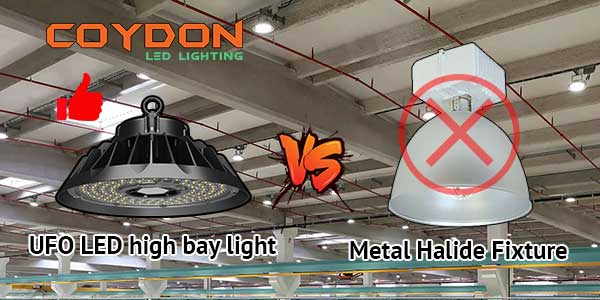
The warehouse has fifty thousand square feet of floor space. The ceiling is thirty feet high. Twelve years ago, someone installed metal halide fixtures up there. Four hundred watts each.
This morning, a supervisor walks through at seven. The lights flicker above him. Some are dim. Others haven’t reached full brightness yet. They need five minutes to warm up. Forklifts sit idle. Workers stand around waiting. Every day starts like this.
The electric bill comes mid-month. The number keeps climbing. Nobody is surprised. Those old fixtures pull power constantly. Most of that electricity turns into heat. You can feel it standing under them. The cooling system runs harder because of it. Two bills for one problem.
Maintenance is a weekly thing now. A burned out lamp means stopping work. Someone fetches a lift. Another drives it across the warehouse. Three people stand watching. The new bulb costs money. The lost time costs more.
Finding replacement parts gets harder every year. Suppliers stop carrying them. What remains costs twice what it did. You call four places just to find one.
Workers near the back walls squint at labels. The light doesn’t reach there well. Pallets cast long shadows. Someone tripped last week. Nothing serious. Could have been.
The lights have always been there. The bills have always been high. Nobody asked if it could be different.
Part 1. Beyond the Hype: The Core Technology That Drives Energy Efficiency
1.1 The Fundamental Shift: From Heating Filaments to Emitting Photons
To understand the energy savings, you have to look at how these lights actually work. The difference starts at the most basic level.
A metal halide lamp creates light by heating things up. Electricity runs through a tube filled with gas and metal salts. The temperature inside climbs to thousands of degrees. The gases get so hot they glow. That glow is your light source.
Think about what that means. You pay for electricity to create intense heat first. That heat then produces light as a byproduct. Most of the energy never becomes illumination. It turns into heat that blows out into your warehouse. Studies show these fixtures waste roughly sixty percent of their input energy this way.
Stand under one for a minute. You feel the heat on your face. That is money leaving your pocket. In summer, your air conditioning runs harder to remove that heat. You pay for the same electricity twice.
The bulbs also spray light in every direction. Some goes down where you need it. Some goes up toward the ceiling. Some gets trapped inside the fixture housing. Manufacturers add reflectors to catch and redirect wasted light. It helps, but it never fixes the core problem.
LED works completely differently. There is no filament. No tube of gas. No heating required.
Inside an LED chip, there is a sandwich of semiconductor material. One layer carries extra electrons. The layer next to it has spaces where those electrons want to go. When electricity flows through, electrons jump across to fill those spaces. As they move, they release energy. That energy comes out as particles of light. Photons.
No heating step in between. The electricity goes in. Light comes out. Direct conversion.
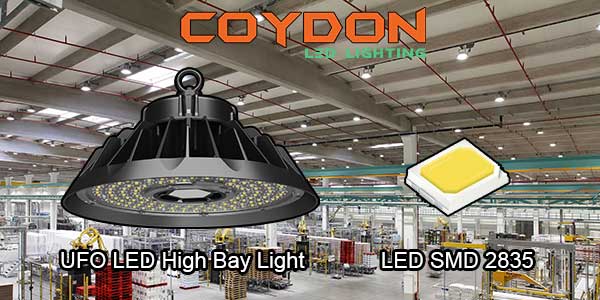
KD-HBD fixtures use SMD 2835 chips from OSRAM. Each chip is tiny. But together, they convert power into light at 150 lumens per watt. That number tells you something important. Most of the electricity becomes visible light. Very little turns into wasted heat.
The chips also sit on a flat surface facing downward. Light naturally goes where you need it. Lenses on your fixtures shape that beam further. You choose sixty degrees, ninety, or one twenty depending on your ceiling height. Less light gets trapped. Less gets scattered. More reaches your floor.
This is not incremental improvement. It is a completely different way of making light. One method heats space to create glow. The other uses electron movement between semiconductor layers. The physics explains why the numbers on your utility bill change so dramatically after a retrofit.
1.2 Luminous Efficacy: The 150lm/W Benchmark
Flip through any lighting catalog. You see watts on every page. Watts tell you what the meter measures. They do not tell you how much light comes out.
A 400-watt metal halide fixture draws 400 watts. Everyone accepts that. But inside that glass tube, temperatures climb high enough to melt metal. That heat is wasted electricity. By the time light reaches the floor, maybe half the original watts did anything useful. The rest just warmed the air above you.
Luminous efficacy connects the two things that matter. Lumens divided by watts. It tells you how much light you actually get for each watt you pay for. Higher numbers mean more light from the same power. Simple.
Old metal halide units run between 80 and 100 lumens per watt when new. After a year, output drops. The bulb degrades. Color shifts. But the meter keeps spinning. You pay the same rate for less light.
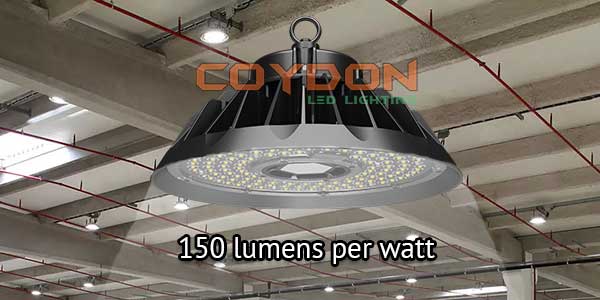
Good LED fixtures now deliver 150 lumens per watt. That number is not a lab curiosity. It comes from actual hardware running in real buildings. Every watt produces 150 lumens of light.
Read competitor materials closely. You see phrases like “up to 150 lumens per watt.” Those words matter. “Up to” means the number was measured somewhere once. Maybe with selected parts. Maybe briefly before heat changed things. It does not mean you will get it.
Some manufacturers give no number at all. They say “high efficacy” or “energy saving” without putting anything on paper. That tells you something too.
Luminous efficacy cuts through the language. When someone talks about efficiency without giving a number, ask for it. When they say “up to,” ask what standard production delivers. The answers tell you what your electric bill will look like.
The difference between 100 lm/W and 150 lm/W adds up fast. A building running fifty fixtures twelve hours a day sees thousands of dollars difference every year. The equipment costs what it costs. The electric bill keeps coming month after month. That is where efficacy really matters.
1.3 Dialux Simulation: Precision Planning for Maximum Savings
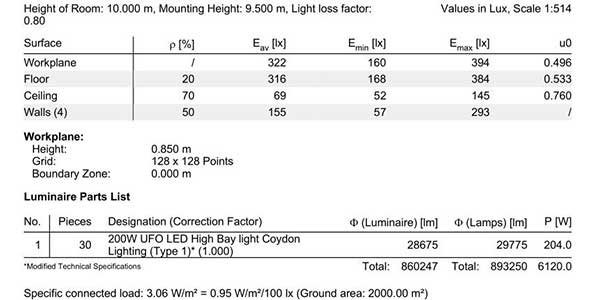
PDF file: 30 PCS 200 Watt UFO LED high bay lights
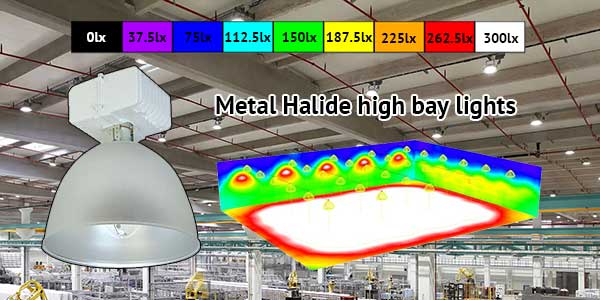
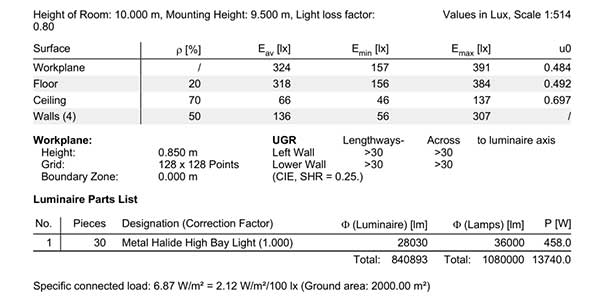
PDF file: 30 PCS 400 Watt Metal Halide high bay lights
You walk through a warehouse. Lights hang everywhere. Some areas are too bright. Some are too dark. The person who installed them just guessed at the spacing. That happens more often than you think.
Lighting design should not rely on guesses. Every space has different dimensions. Different ceiling heights. Different tasks happening on the floor. A fixture that works in one spot may fail in another.
Dialux is software that takes the guesswork out. You put in the room measurements. You put in the ceiling height. You put in the work surface height. You tell it what tasks people do there.
The software calculates where light goes. How much reaches the floor. Where shadows might form. Whether corners stay dark. It runs the numbers before anyone lifts a ladder.
This matters because lighting mistakes cost money. Put in too many fixtures and you pay for equipment you did not need. You also pay to run them year after year. Put in too few and workers struggle to see. Mistakes happen. Productivity drops.
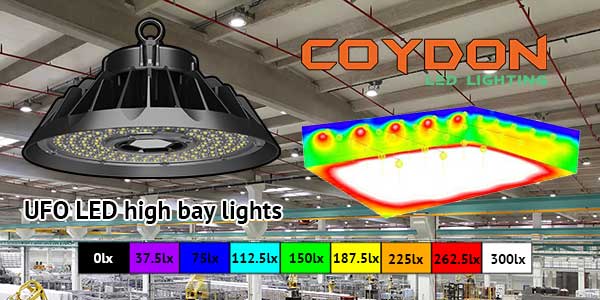
We ran a simulation recently for a 2,000 square meter space with ten meter ceilings. The customer had thirty 400-watt metal halide fixtures installed. The software showed we could replace them with thirty 200-watt LED fixtures. Same number of units. Same mounting positions. But total power dropped from 13,740 watts to 6,120 watts.
The simulation also showed light levels. Average illumination stayed nearly identical. Three hundred twenty four lux from the metal halides. Three hundred twenty one lux from the LEDs. Uniformity actually improved slightly.
The customer did not have to wonder if the new lights would work. They saw the numbers before buying anything. They knew what to expect.
That is what Dialux provides. Certainty instead of guessing. Precision instead of approximation. The software does not care about marketing claims. It only cares about physics and geometry. The results speak for themselves.
Part 2. From Watts to Wealth: How Energy Efficiency Translates to Your Bottom Line
PDF file: 30 PCS 200 Watt UFO LED high bay lights
PDF file: 30 PCS 400 Watt Metal Halide high bay lights
2.1 The Direct Payoff: Slashing Your Electricity Bill by 60% or More
Take a single 400-watt metal halide fixture. It runs twelve hours a day. At twelve cents per kilowatt-hour, that light costs about twenty one dollars per month. Two hundred fifty two dollars per year.
Swap it for a 200-watt LED. Same hours. Same electric rate. Monthly cost drops to about ten dollars. One hundred twenty dollars per year. The difference is one hundred thirty two dollars annually. For one light.
Warehouses do not run on one light. They run on dozens. Sometimes hundreds.
Here is a real job. A building had thirty metal halide fixtures. Total power draw was 13,740 watts. That is 13.7 kilowatts running every hour those lights are on.
Twelve hours a day. Three hundred sixty five days a year. Those fixtures burn about 60,000 kilowatt-hours annually. At twelve cents each, the yearly lighting bill hits roughly seven thousand two hundred dollars.
The LED replacement used thirty fixtures at 200 watts each. Total power dropped to 6,120 watts. Same layout. Same mounting height. Same number of lights. Yearly consumption fell to about 26,800 kilowatt-hours. The annual bill dropped to about three thousand two hundred dollars.
The gap is four thousand dollars per year. Every year. For thirty lights.
Scale that up. A building with one hundred fifty lights saves twenty thousand dollars annually. Two hundred fifty lights saves thirty three thousand. The math runs straight because each fixture saves the same amount.
Some facilities run eighteen hours daily. Some pay fifteen cents per kilowatt-hour. Some face demand charges that multiply the savings. The numbers move but the pattern holds.
That thirty-fixture job saved 7,200 watts every hour of operation. Over a year, that is 33,200 kilowatt-hours not pulled from the grid. At the national average of 0.85 pounds of CO2 per kilowatt-hour, that comes to about twenty eight thousand pounds of carbon dioxide avoided annually. From thirty lights.
Multiply that across a larger space. A warehouse with two hundred fixtures running twelve hours daily saves about forty eight thousand dollars per year at twelve cent power. That money stays in the budget instead of going to the utility company.
Payback matters too. If the LED fixtures cost two hundred fifty dollars each installed, two hundred fixtures cost fifty thousand dollars. At forty eight thousand dollars annual savings, the equipment pays for itself in thirteen months. After that, the savings go straight to the bottom line.
Some utilities offer rebates for energy efficient lighting. Those can cut the upfront cost by thirty percent or more. The payback gets even shorter. The math works either way.
The new fixtures cost what they cost. But the electric bill comes every month. The savings start the day the new lights turn on and keep going. That is the direct payoff. No complicated formulas. Just simple arithmetic based on what the meter actually measures. Less power in. Same light out. The difference shows up on the utility statement month after month.
2.2 The Hidden Savings: Slashing Maintenance and HVAC Costs
Electricity is not the only cost tied to lighting. Maintenance expenses add up too. They just appear in different parts of the budget.
A metal halide fixture runs about 20,000 hours before it dies. In a warehouse running twelve hours daily, that is roughly four and a half years. Maybe less if the lights turn on and off a lot.
When a fixture fails, someone has to go up there. That means bringing in a lift. Two guys spend an hour on the job. The new bulb costs money. Their time costs money. The lift rental costs money. Down below, work slows down.
Over ten years, a metal halide fixture might get replaced twice. Sometimes three times. Each replacement brings the same costs.
LED fixtures run 50,000 hours or more. At twelve hours daily, that is over eleven years. Most warehouses will never replace an LED bulb during the building’s lifetime. The lights just keep running.
Your fixtures come with a five year warranty. If something goes wrong, it gets handled. No cost to the customer. No surprise bills.
Now look at heat. Metal halide fixtures run hot. Really hot. That heat pours into the warehouse air. During summer, the cooling system works harder to pull it out. Every watt that becomes heat is another watt the AC has to fight.
A 400-watt metal halite fixture dumps about 380 watts of heat into the space. Multiply that by thirty fixtures. That is 11,400 watts of heat constantly added to the building. The AC runs longer and harder because of it.
LED fixtures run cool. A 200-watt LED puts out maybe 40 watts of heat. The rest leaves as light. The difference is huge. The cooling load drops significantly.
In a large warehouse, that means smaller AC units or lower runtime. Both show up on the utility bill. Not in the lighting section, but in the HVAC section. The savings are real even though they are harder to see.
Add it all together. Lower electric bills from the lights themselves. Lower HVAC bills from reduced heat. Lower maintenance bills from fewer replacements. The numbers keep stacking up.
2.3 Smart Controls: Amplifying Savings with Dimming and Sensors
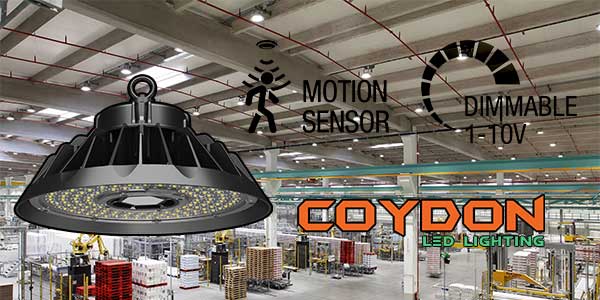
Lights do not need to run full brightness all the time. Warehouses have empty aisles. Loading bays sit idle between trucks. Break rooms go unused for hours. Yet most lights stay on anyway.
Smart controls change that. Your fixtures offer two options. Microwave sensors detect movement. 1-10V dimming adjusts light levels.
Think about how a warehouse operates. Forklifts move through certain aisles at certain times. Other aisles sit empty for hours. With sensors, lights in empty zones dim down or turn off. When a forklift approaches, they brighten up again. The worker never notices the change. The meter does.
Microwave sensors work differently from standard motion detectors. They emit low-power signals that bounce off surfaces. Movement disturbs the signal pattern and triggers the light. The technology responds instantly. No delay when someone walks into a dark aisle.
Now consider dimming. Not every task needs full light. Night shift cleanup crews might need less. Early morning stocking might need less. With 1-10V dimming, you set the level that fits the task. The lights draw less power. They also run cooler and last longer.
Combine the two and the savings multiply. Aisle lights sit at ten percent when empty. A forklift enters. They ramp up to full. The forklift leaves. They fade back down. The space stays safe. The equipment saves power every minute of every day.
Some facilities use daylight harvesting. Sensors read natural light coming through windows or skylights. Electric lights dim down automatically. Why pay for light the sun provides for free?
The controls add upfront cost. But they pay back fast in spaces with variable occupancy. Warehouses. Distribution centers. Manufacturing plants. Anywhere people come and go throughout the day.
Your fixtures ship ready for these options. The wiring is there. The compatibility is there. When a customer wants smart controls, the fixtures handle it. No special models. No long lead times.
Part 3. Your Next Step Towards a Brighter, More Profitable Warehouse
3.1 Not All LED High Bays Are Created Equal. Why Choose Coydon Lighting?

Read competitor websites. You see the same phrases everywhere. “Energy efficient.” “Long lifespan.” “High quality.” These words do not tell you much. Every lighting company says them.
The difference is in what you can verify. Your fixtures use OSRAM SMD 2835 chips. That is not a generic component from an unknown factory. OSRAM is a name people recognize. The chips are tested. The performance is documented. The 150 lumens per watt is real output, not marketing language.
Some manufacturers claim similar numbers. Ask them what chips they use. Ask for test reports. The answers tell you what you are actually getting.
Your fixtures carry a five year warranty. That means something. Five years is a long time in this industry. If a fixture fails during that period, the customer does not pay. No unexpected expenses. No fighting with suppliers over who covers what.
The IP65 rating matters too. Dust and moisture get into warehouses. They get into factories. They get into parking garages. An IP65 fixture handles those conditions. Sealed against particles. Protected against water spray. It keeps working where lesser fixtures might fail.
Now look at the services behind the hardware. You offer free Dialux simulations. Before a customer spends a dollar, they see exactly how their space will look. Light levels. Uniformity. Fixture placement. No surprises after installation.
A recent project shows this working. Forty six fixtures in a warehouse with eight meter ceilings. The Dialux report predicted the results. After installation, the actual performance matched the simulation. The customer knew what to expect and got exactly that.
Competitors talk about quality. You can show it. Chips from a known manufacturer. Warranty that covers five years. Sealed construction for harsh environments. Simulations that take the guesswork out. These are not claims. They are facts about how the products and services actually work.
3.2 Let’s Engineer Your Lighting Solution Together

You have read through the numbers. You understand how the technology works. You see where the savings come from. Now the question is what happens next for your facility.
Every building is different. Ceiling heights vary. Aisle layouts differ. Hours of operation shift by season. A solution that works for one warehouse may not fit another.
Start with a simple conversation. Tell us about your space. Square footage. Ceiling height. Current fixtures. Hours of operation. Local electric rates. That is all we need to run the initial numbers.
We will calculate your potential savings. Not guesses. Not estimates based on averages. Actual math using your specific information. We will show you what the payback looks like. What the monthly savings come to. What the total picture looks like over five years.
For customers who want more detail, we provide a full Dialux simulation. This is not a generic layout. It is your actual space with your actual dimensions. You see where every fixture goes. You see light levels at every point on the floor. You see the uniformity numbers before installation begins.
Some people like to see the three dimensional renderings. Those are included too. You can visualize how the space will look with the new lights installed.
There is no cost for this. No obligation. Just information to help you make a decision.
When you are ready to move forward, the process is straightforward. Fixtures ship ready to install. The controls you want are already built in. The warranty is already in place.
Click the [ Inquiry Now ] button. Tell us about your space. We will handle the rest.
Conclusion
Walk through any warehouse with old metal halide lights. The signs are everywhere. High electric bills. Frequent bulb replacements. Heat rising off the fixtures. Workers squinting in dim areas.
None of that needs to continue.
LED technology has matured. The fixtures available today deliver on what earlier generations only promised. Better efficiency. Longer life. Consistent light output. The numbers are not theoretical anymore. They show up in real projects with real customers.
The choice comes down to timing. Upgrade now and start saving immediately. Wait and keep paying for outdated equipment. The math does not favor waiting.
Coydon Lighting provides the hardware and the expertise. OSRAM chips inside every fixture. Five year warranty behind every unit. IP65 rating for harsh environments. Free Dialux simulations to take the guesswork out of planning.
Your space has specific requirements. We can help meet them. The process starts with a conversation about what you need and what you want to achieve.
Contact us when you are ready to move forward. We will handle the rest.