
What Do Lumens Mean? Understanding Brightness for LED Warehouse Lights
Table of Contents
Part 1. Are You Still Using Watts to Choose Warehouse Lights? You’re Probably Overpaying by 50%
1.1 Stop Confusing Watts for Brightness: Why Lumens Are the Real Hero of Your Warehouse Lighting
Think back to how you used to buy lights. We all did the same thing. Walk into a store, look at the wattage, and assume bigger numbers meant brighter light. A 400-watt metal halide? Must be brighter than that 250-watt one. Simple logic. It worked for decades. If you manage a warehouse today, that old habit probably still sits somewhere in the back of your mind.
Here is the problem. That logic broke.
LEDs do not play by the old rules. A 200-watt LED fixture can easily match the brightness of a 400-watt metal halide. Same light output. Half the energy draw. But when buyers see “200W” on a label, they hesitate. They think it looks weak. And that is where the confusion starts. Watts measure energy consumption. They tell you what the light costs to run. They do not tell you how bright it actually is.
So what does? Lumens.
Lumens measure visible light. That is it. More lumens equals brighter light. Less lumens equals dimmer light. When you switch to LED, you have to retrain your brain. Stop asking “how many watts?” Start asking “how many lumens?” This one shift in thinking can save your business thousands on energy bills.
I have been in this industry for over ten years. At Coydon Lighting, we have designed lighting for warehouses of all sizes. What I have learned is simple: the right light is not about guessing. It is about understanding what you are buying. This guide will walk you through everything. No fluff. Just what works.
1.2 The $1,000 Mistake: Why Picking Lights by Wattage Costs You Money
I talked to a warehouse manager last month. He was frustrated. His energy bills kept climbing even after switching to LED. So I asked what he bought. He pointed to a row of bright fixtures and said “400-watt LEDs, same as my old metal halides.”
Right there. That is the mistake.
He spent extra money on fixtures he did not need. And now he pays higher electricity bills every single month. A 400-watt LED is not the same as a 400-watt metal halide. It is way brighter. He could have used 200-watt fixtures and saved thousands upfront. Plus his energy bill would be half of what it is now.
The opposite happens too. Another manager played it safe. He picked lower wattage because he was nervous about glare. His warehouse ended up dim. Workers started complaining. Someone misread a label and shipped the wrong product. Another person tripped over a pallet that should have been visible. Bad lighting creates real safety risks.
Here is why this keeps happening. Old metal halides waste energy. They turn most of it into heat. You are basically paying to run a heater up near your ceiling. LEDs work different. They turn energy into light. So a 200-watt LED puts out about the same usable light as a 400-watt metal halide. Same brightness. Half the energy.
We see this at Coydon all the time. A customer calls asking for 400-watt LEDs. We walk them through the numbers. Show them the photometric data. Compare actual light output. Most end up going with 200-watt or 240-watt fixtures instead. They get the same brightness for way less money.
The savings stack up quick. Thirty fixtures running around the clock can easily hit five figures in extra costs per year. That is real money. Money that could go elsewhere.
So stop looking at watts. They do not tell you how bright a light will be. Not anymore. You need to understand lumens. That is the only way to get it right.
Part 2. 150 Lumens Per Watt: What This Number Actually Means for Your Warehouse
2.1 What Are Lumens, Exactly? Decoding the “Brightness” Metric
Let us keep this simple. Lumens measure light. Full stop.
A lumen tells you how much visible light comes out of a fixture. Higher number means brighter. Lower number means dimmer. That is all you really need to remember.
Here is where most people get tripped up. We spent years using watts to judge brightness. A 100-watt bulb was brighter than a 40-watt. That worked fine back then because bulbs all performed about the same. But LEDs changed the game. Now a 20-watt LED can outshine a 100-watt incandescent. Same brightness. Way less power.
So here is a better way to think about it. Watts are what you pay the electric company. Lumens are what your eyes actually see. I like to compare it to buying dinner. Watts are the bill. Lumens are the food on your plate. A good restaurant gives you a full meal without charging you for stuff you did not order. That is what efficient LEDs do.
Now take our KD-HBD series UFO high bays. These fixtures hit 150 lumens per watt. That number matters. A 200-watt Coydon fixture pushes about 30,000 lumens. Enough to replace a 400-watt metal halide easily. Same light. Half the watts.
I have seen too many people buy based on wattage and end up disappointed. They get a fixture that draws the right power but puts out the wrong light. Then they wonder why their warehouse still looks dim. Or why their energy bill did not drop like they expected.
So when you see 150 lumens per watt on our spec sheet, here is what it means. You are getting light, not heat. Every dollar you spend turns into brightness you can actually use. That is the whole point of switching to LED.
2.2 Lumens vs. Watts: A Practical Example with Your Warehouse in Mind
PDF file: 30 PCS 200 Watt UFO LED high bay lights
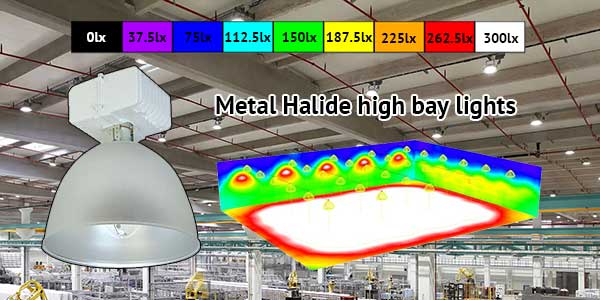
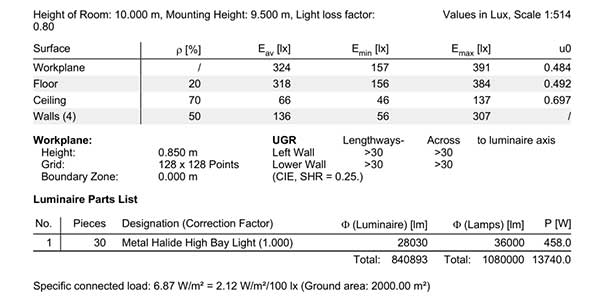
PDF file: 30 PCS 400 Watt Metal Halide high bay lights
Numbers mean more when you see them side by side. So let us do that.
Take a 2000 square meter warehouse. Pretty standard size. Now look at two ways to light it.
First option. Thirty 400-watt metal halides. Total power draw hits 13,740 watts. Average light level on the floor measures about 324 lux.
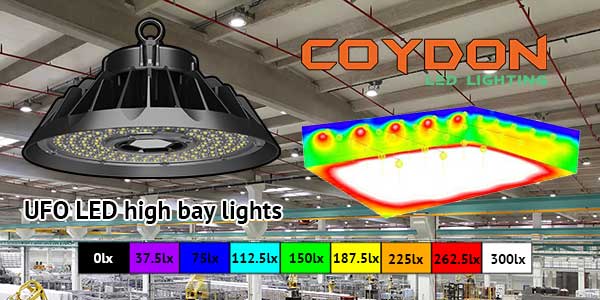
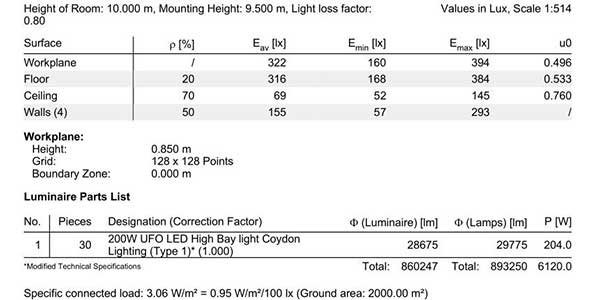
Second option. Thirty Coydon 200-watt UFO high bays. Total power draw drops to 6,120 watts. Average light level comes in at 322 lux.
Here is what that looks like in a simple table.
| Comparison: | Metal Halide 400W | Coydon LED 200W |
| Fixtures: | 30 pieces | 30 pieces |
| Total Power: | 13,740W | 6,120W |
| Average Lux: | 324 lx | 322 lx |
I pulled these numbers from actual Dialux simulations we ran. The metal halide data comes from a real 400W fixture. The LED side uses our KD-HBD series. Same warehouse size. Same mounting height. Same layout.
Now here is what jumps out. The light levels are almost identical. 324 lux versus 322 lux. Your eyes would never tell the difference.
But the power draw? That is a whole different story.
The LEDs use 6,120 watts. The metal halides use 13,740 watts. That is a drop of over 55 percent. More than half the energy gone. Just by switching from watts to lumens.
Think about what that means for your electricity bill. Thirty fixtures running twelve hours a day. Or twenty-four hours in some warehouses. The savings stack up fast. We are talking five figures every year for a space this size.
This is why lumens matter. Watts only tell you what you spend. Lumens tell you what you get. And with Coydon LEDs, you get the same light for way less money.
Here is the bottom line. You do not need more watts. You need better lumens.
2.3 Beyond Lumens: The “Useful Lumens” Concept in Directional Lighting
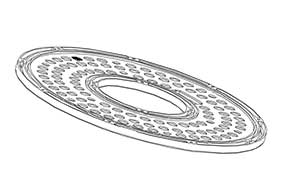
Here is something most people miss. Not all lumens actually reach your floor.
Take an old metal halide fixture. It shoots light in every direction. Up, down, sideways. That is called omnidirectional. Sounds good in theory. But in practice, you need to catch all that scattered light and redirect it downward. So manufacturers add big reflectors around the bulb.
Those reflectors cause problems. Light bounces around inside the fixture. Some gets absorbed. Some gets trapped. By the time it finally heads toward your floor, you have lost maybe 40 to 50 percent of what the bulb produced. You paid for those lost lumens. But they never helped your workers see better.
Now look at our UFO LED high bays. Totally different story.
LEDs are directional by nature. The chips face downward. They point right where you need light. No reflectors required. No light bouncing around inside a metal housing. Just clean, direct illumination heading straight for your warehouse floor.
We pair that with high-transmission PC lenses. The lenses focus the beam exactly where it needs to go. Wide angle for low ceilings. Narrow beam for high mounting. You pick what fits your space.
This is where the term “useful lumens” comes in. Engineers use it to describe light that actually reaches your work surface. Not light wasted inside the fixture. Not light bouncing off walls you do not care about. Useful lumens are what your forklift drivers see.
At Coydon Lighting, we design every fixture with this in mind. Maximizing useful lumens is the goal. Because 20,000 well-directed lumens beat 30,000 messy lumens every time. Your eyes notice the difference. So does your energy bill.
Part 3. How to Get the Right Light Without Guessing: Precision Lighting That Actually Works
3.1 Precision Lighting Design: Why One-Size-Fits-All Does Not Work
Here is something I learned the hard way. Light does not behave the same in every space.
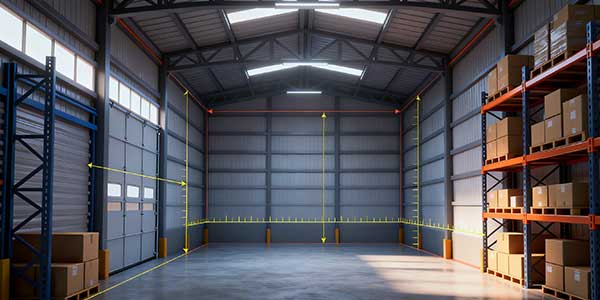
Take 20,000 lumens. Put it in a warehouse with 8-meter ceilings. The floor lights up nicely. Everything looks clear. Now take that same fixture up to 15 meters. The light spreads out and fades before it hits the ground. Suddenly 20,000 lumens looks dim. Same fixture. Same light output. Completely different result.
This trips up a lot of buyers. They see a lumen number and assume it guarantees a certain brightness. But mounting height changes everything. So does beam angle. And spacing between fixtures. And reflectivity of floors and walls. Change any of these and your light levels shift.
I have walked into warehouses where someone just guessed. They picked fixtures based on what worked for their friend down the road. Now half the aisles are dark. The other half are over lit. Workers complain. Energy gets wasted.
This is why we do things differently at Coydon.
Before you buy a single fixture, we run a Dialux simulation. Dialux is lighting design software used by professionals worldwide. Engineers rely on it. Architects trust it. We plug in your actual warehouse dimensions. Your ceiling height. Your planned layout. Then we add our photometric data. The software calculates exactly how light spreads across your floor.
What comes out is not a guess. It is a map. It shows average lux levels. Uniformity ratios. Hot spots and dark corners. Everything you need to know before spending a dollar.
Last month we ran one for a customer with a tricky space. Odd ceiling angles. Narrow aisles. They thought they needed 50 fixtures. The simulation showed 38 would do the job better. Saved them twelve fixtures worth of cost. And the light ended up more even.
That is the point. Precision beats guessing every time.
3.2 Real Results, Not Just Guesses: A Dialux Simulation Case Study
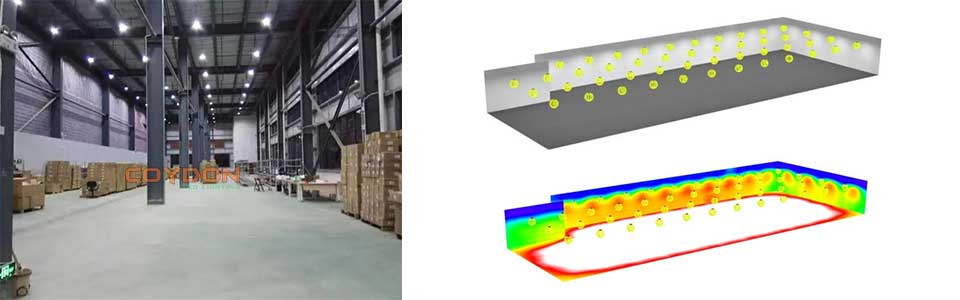
The calculation report: UFO LED high bay lights 150 watt x 46 piece ( Project 02 )
Let me show you what this looks like with real numbers.
Last year we worked on a warehouse project. The space measured 2323 square meters. Ceiling height sat at 8 meters. The customer wanted bright, even light across the whole floor. No dark spots. No shadows. Just clean illumination for their team.
We ran the numbers through Dialux first. No guessing. No estimating. Just precision.
The final design used 46 Coydon 150W UFO high bays. Mounted at 7 meters. Arranged in a grid pattern to cover every aisle. Then we let the software do its work.
Here is what came out. Average illuminance on the workplane hit 338 lux. That is plenty bright for warehouse operations. Picking orders. Loading trucks. Moving inventory. All easy with light at that level.
But the number I care about more is uniformity. They call it u0 in the report. Ours came in at 0.389.
Uniformity measures how evenly light spreads. Perfect uniformity would be 1.0. That means every spot gets exactly the same light. Impossible in real life. But 0.389 is solid. It means the darkest area still gets nearly 40 percent of the average brightness.
Why does this matter? Walk into a warehouse with poor uniformity. You see shadows everywhere. Dark patches between lights. Aisles that feel dim even though the overall space looks bright. Those shadows hide things. Pallets left in walkways. Spills on the floor. People move slower because they cannot see clearly.
Good uniformity fixes that. Light reaches everywhere. Workers feel safe. Mistakes drop.
Here is the point. We did not guess these numbers. We did not say “this looks about right.” We simulated. We calculated. Then we delivered exactly what the customer needed.
That is what Coydon Lighting offers. Not just fixtures. Verified results you can trust.
3.3 Customize Your Illumination: Smart Controls for Modern Warehouses
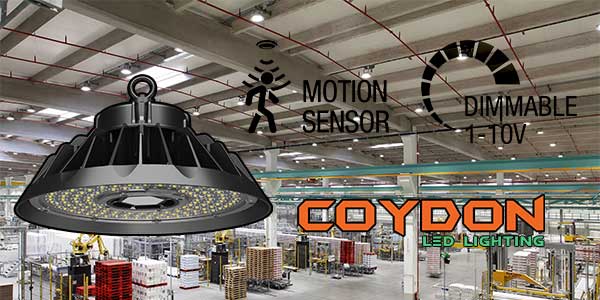
Here is something most people overlook. Lights do not need to run full blast all the time.
Think about your warehouse. Aisles sit empty for hours. Storage areas see traffic maybe once a day. Loading docks get busy then quiet. But most lights just stay on. Burning power. Running up bills. Wasting energy on empty space.
Our KD-HBD series fixes that with smart controls.
First option is microwave motion sensing. The fixture stays dim when nobody is around. Maybe 20 percent power. Just enough for security cameras. Then a forklift turns into the aisle. The light jumps to full brightness instantly. Driver sees everything clearly. Thirty seconds after they pass, it drops back down.
This works great for rack aisles. Corridors. Storage zones with occasional traffic. You stop paying for light when nobody needs it.
Second option is 1-10V dimming. This lets you connect fixtures to a central control system. Maybe you want lights at 80 percent most days. Maybe you ramp them up during night shifts. Maybe sensors on the roof tell them to dim when sunlight pours through the skylights.
The system handles all that automatically. You just set your preferences and let it run.
I have seen warehouses cut another 30 percent off their energy bills just by adding controls. On top of what they already saved switching from metal halide. That is real money.
Here is the bigger point. Coydon does not just sell replacement lights. We sell upgrades. A better system. Smarter illumination. Fixtures that adapt to how your space actually works.
That is what modern warehouses need. Not just brightness. Intelligence.
Part 4. Get Your Free Dialux Simulation: See Exactly What Your Warehouse Needs

4.1 Don’t Guess Your Warehouse Lighting. Let’s Engineer It.
Let us be honest. You have read a lot of numbers in this guide. Lumens. Watts. Lux. Uniformity. It can feel like a lot.
But here is what really matters. Understanding lumens gets you halfway. Choosing the right partner gets you the rest.
At Coydon Lighting, we do things different. Sure, we build high-quality UFO high bays. Our KD-HBD series delivers 150 lumens per watt. That is industry leading. But we do not just sell fixtures. We sell certainty.
When you work with us, you get more than a box of lights. You get a complete lighting solution. Backed by science. Verified by software. Designed specifically for your space.
No more guessing. No more hoping it looks right. No more paying for wasted energy.
We take your warehouse dimensions. Your ceiling height. Your layout. Your specific needs. Then our team runs a full Dialux simulation. Free of charge. You see exactly how light behaves before spending a dollar.
This is how lighting should work. Precision. Not estimates. Engineering. Not guessing.
So here is my offer. Stop wondering if you are overpaying. Stop worrying about dark spots. Let us show you what right looks like.
Click the button. Get your free Dialux simulation and quote. No pressure. Just real numbers for your real warehouse.
4.2 Why Choose Coydon Lighting for Your Warehouse Upgrade?
You have options. Plenty of companies sell LED lights. Here is why Coydon Lighting is different.
High efficacy. Our KD-HBD series delivers 150 lumens per watt. That is not just marketing talk. It means you get more light from every dollar spent on electricity. Industry leading numbers you can verify.
Reliable components. We use OSRAM LEDs inside every fixture. Not generic chips from unknown suppliers. Combined with CRI 80+ for accurate color rendering. Colors look natural. Labels are easy to read. Workers see clearly.
Five year warranty. We build these fixtures to last. But if something goes wrong, we stand behind them. No excuses. No runaround.
Data you can trust. Every Coydon fixture comes with professional IES files. You can plug them into Dialux yourself. Run your own simulations. Verify our numbers. We welcome the scrutiny because we know what our lights can do.
Smart controls. Need motion sensing? We offer microwave sensors that dim when aisles empty. Want integration with building systems? Choose 1-10V dimming. Your lights adapt to how your warehouse actually runs.
This is not complicated. We build quality fixtures. We provide real data. We help you design it right. That is what we deliver. Every time.