
Industrial LED Lighting: The Manager’s Field Guide to Light That Works
Alright, let’s cut to the chase. You’re not here for a physics lesson on diodes. You’re here because your plant manager is on your back about the energy bill, your maintenance crew is tired of changing bulbs in the rafters, and you’ve got safety guys pointing out shadowy corners where accidents are waiting to happen. I’ve been there. We all have.
That stack of lighting catalogs on your desk? It’s overwhelming. UFO high bays, flood lights – they all claim to be the answer. But industrial LED lighting isn’t about picking a pretty fixture. It’s about solving operational problems with light.
Let’s Start With the Problem You’re Actually Trying to Fix.
Problem #1: “My energy costs are eating me alive.”
The Old Way: You’ve got 400W metal halide fixtures. They pull about 455W with the ballast. Run them 24/7, that’s real money. At $0.12/kWh, one fixture costs you nearly $500 a year to operate. For 100 fixtures? That’s a $50,000 line item.
The LED Reality: Swap that for a 150W LED high bay. Same light, often better. Annual cost: about $160. You just saved $340 per fixture, per year. The math isn’t complicated. It’s brutal, and it’s in your favor. That’s not “saving energy.” That’s funding your next capital project with money you used to literally throw away.
Problem #2: “My guys are always up in a lift, not on the floor.”
The Relamping Cycle: Metal halide lamps last 10,000 hours if you’re lucky. In a 24/7 operation, that’s barely over a year. Every relamp is 30 minutes of a skilled electrician’s time, a lift rental, and a production area taped off. The bulb might be $40, but the total cost of that service call is pushing $200.
The LED Reality: A quality industrial LED fixture runs for 50,000 to 100,000 hours. That’s 6 to 12 years. You’re not just buying a light; you’re buying back your maintenance team’s time. Suddenly, they’re troubleshooting a conveyor motor instead of playing swap-the-bulb for the third time this month.
Problem #3: “The light in here is terrible for actually working.”
The Yellow Haze And The Slow Start: High-pressure sodium light makes everything look sickly. Is that wire red or brown? Good luck. Metal halides take 15 minutes to warm up. Try that on a night shift – your guys are working in the dark waiting for the lights to catch up.
The LED Reality: Instant-on. Full brightness. Light that looks like actual daylight (4500K is the sweet spot). Colors look true (that’s the CRI 80+ spec). It reduces mistakes and eye strain. It’s not a luxury; it’s a tool for better quality and faster work.
So, What Exactly Are You Buying Into?
The term “industrial LED lighting” covers two main beasts you need to know:
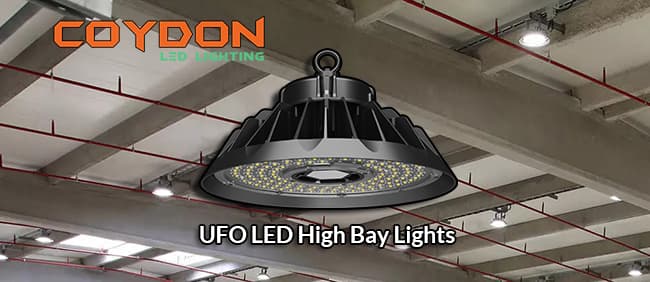
- The UFO High Bay (Your Indoor Workhorse): Looks like a flying saucer. Its job is to hang from your 20-foot ceiling and bathe the entire floor in even, shadow-free light. You choose these based on mounting height and how wide an area you need to cover. A 120° beam spreads wide. A 60° beam punches down more directly. This is your warehouse, workshop, and assembly line hero.
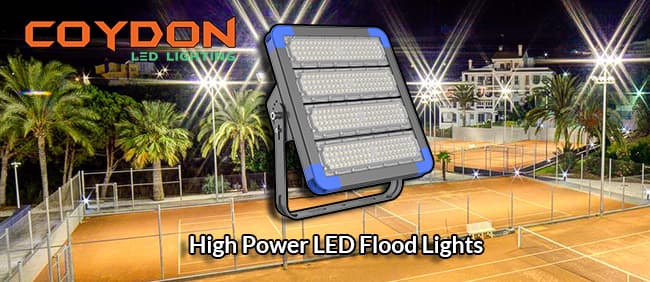
- The LED Flood Light (Your Indoor/Outdoor Heavy Lifter): This is the tough one. Square, rugged, built like a tank. Its job is to throw light. Need to illuminate the side of a building from 100 feet away? Light up a football field-sized yard? Wash light evenly across a massive wall? This is your tool. You pick this based on throw distance and beam angle. A 15° beam is a laser beam for long distance. A 90° beam is a wide flood for up-close area lighting.
Forget the Brochure Speak. Here’s Your Cheat Sheet for Key Specs:
- IP Rating: This is your durability code. IP65 means dust-tight and protected against water jets from a nozzle. Good for most indoor industrial. IP66 means it can handle powerful water jets. That’s your outdoor, “go ahead and hose it down” rating.
- Beam Angle: This is everything. Get it wrong, and you waste money and have dark spots. Wide beam (120°) = covering a big area from high up. Narrow beam (15°-30°) = throwing light a long way to a specific spot.
- CRI (80+): Color Rendering Index. Under 80, colors look off. At 80+, a red warning light looks red, a blue wire looks blue. It’s a safety and quality control spec.
- 50,000 Hour Life: This isn’t marketing. This is the result of good engineering – specifically, the heat sink. If the fixture doesn’t have a hefty, finned aluminum heat sink to pull heat away from the LEDs, it won’t last. The housing is the heat sink on good fixtures.
The Bottom Line.
This isn’t an electrical purchase. It’s an operational efficiency purchase. You’re trading a known, high recurring cost (energy + maintenance) for a one-time capital investment with a predictable, fast payback.
The smart move isn’t to replace everything at once. It’s to start with your worst area – the one with the highest energy use, the most failures, or the worst light for the task. Pilot it. Measure the kilowatt-hour drop. Talk to the guys working under them. See the maintenance log stay empty.
The data will make the case for you. Then you roll it out, bay by bay, and watch a line item that was always a cost start paying you back, year after year. That’s what modern industrial LED lighting is really about.